Showing posts with label Football. Show all posts

Monday, December 20, 2021

It's The Most Wonderful Time of the Beer: Illuminated Brew Works War on Xmas

Beer #20 was a good one.  It was War on Xmas from Illuminated Brew Works, located on Chicago's northwest side.  White stouts are always kind of a mind fuck, and this is no exception.  It's a white milk stout with nutmeg, cinnamon, and vanilla, and it tastes more like a classic winter ale than a stout, but it's pretty damn good.  And at 11%, it packs a nice punch.

Name:  War on Xmas
Brewery:  Illuminated Brew Works
Location:  Chicago, IL
ABV:  11%
IBU:  N/A
Good for drinking if:  You need a strong beer while you are watching your COVID-decimated team shooting themselves in the foot at literally every opportunity.
Rating (out of five stars, by quarter star increments):  4.5

Wednesday, July 21, 2021

Major Sports Championship Droughts Update

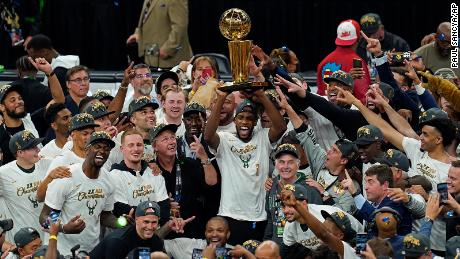
Last night the Milwaukee Bucks beat the Phoenix Suns to win their first NBA championship since Lew Alcindor and Oscar Robertson swept their way to the franchise's first title in 1971.  As I'm wont to do when teams break major sports droughts, I'm going to give you an updated look at a variety of major sports droughts.

I'm going to start micro, focusing on the NBA, then I'm going a little more macro, looking at first title droughts among the four major sports, and then I'm going a little more macro, looking at the longest overall and current championship droughts for major sports franchises, and finally I'm going even more macro, looking at major sports droughts for cities overall.

NBA Droughts

Longest Droughts Before Winning First NBA Title
This year's losing team, the Suns, played their first season in the NBA in the 1968-1969 season, and they got up to a 2-0 lead in the NBA Finals, so it looked like they were about to win their franchise's first title.  Giannis had other thoughts, and the Suns will have to wait at least another year.  The Suns' 53 years is the longest an NBA franchise has gone before winning its first title.  Here are the other NBA franchises that took (or are currently taking) more than 25 years to win an NBA title after joining the league (some franchises won ABA titles prior to joining the NBA, which is noted).  For the years, I'm counting the year in which the season ended (i.e., the 1996-1997 season would be considered 1997), and for the teams that have never won, I'm making the countdown from 2022, since that's the first year any of these teams can win a title.  Anyway, here you go (I'm leaving the Charlotte Hornets out, since they've had a strange franchise history):
Phoenix Suns:  53 years (1969-present)
Los Angeles Clippers/San Diego Clippers/Buffalo Braves:  51 years (1971-present)
Detroit Pistons:
  49 years (1950-1989)
Utah Jazz/New Orleans Jazz:  47 years (1975-present)
Cleveland Cavaliers:  45 years (1971-2016)

Brooklyn Nets:  45 years (1977-present; but won two ABA titles prior to joining NBA)
Denver Nuggets:  45 years (1977-present)
Indiana Pacers:  45 years (1977-present; but won three ABA titles prior to joining NBA)
Minnesota Timberwolves:  32 years (1990-present)
Orlando Magic:  32 years (1990-present)
Dallas Mavericks:  30 years (1981-2011)
Memphis/Vancouver Grizzlies:  26 years (1996-present)
Houston Rockets/San Diego Rockets:  26 years (1968-1994)

Longest Current NBA Title Droughts
Now that the Bucks have erased 50 years of relative futility, let's take a look at the ten teams with the longest current NBA title droughts.  This will include teams that have never won a title, and it will also exclude ABA titles.  For those Suns fans out there, at least you're not first on this list.  Those teams with an * have never won a title
1.  71 years:  Sacramento Kings/Kansas City Kings/Kansas City–Omaha Kings/Cincinnati Royals/Rochester Royals (1951)
2.  64 years:  Atlanta Hawks/St. Louis Hawks (1958)
3.  53 years:  Phoenix Suns (1969)*
4.  51 years:  Los Angeles Clippers/San Diego Clippers/Buffalo Braves (1971)*
5.  49 years:  New York Knicks (1973)
6.  47 years:  Utah Jazz/New Orleans Jazz (1975)*
7 (tie):  45 years:  Portland Trailblazers (1977); 
Brooklyn Nets (1977)*; Denver Nuggets (1977)*; Indiana Pacers (1977)*

Major Sports First Title Droughts
With the Suns still in search of their first title, as I've done in years past, I'm going to take a look at the longest first-championship droughts in each of the four major sports leagues –- that is, the longest it has taken a franchise to win its first title since joining its league.  Here are a couple caveats and clarifications:

  • I'm not counting AFL, ABA, or WHA championships.  
  • I'll be starting a former ABA and WHA team's clock from the year it began playing in the NBA and NHL, respectively.  
  • For former AFL teams, I'll be starting from the first Super Bowl season (1966-1967), even though the NFL and AFL didn't merge for another few years.  
  • For the NBA, NFL, and NHL, I'm counting the year the season ended as the season, so for instance, Super Bowl XX was played after the 1985 season, but it was played in 1986, so that counts as 1986.  
  • For MLB, I am counting 1903 as the first year possible, since that was the year the first World Series was played.  
  • For the NHL, I am counting 1927 as the first year possible, since that was the year of the first official NHL playoffs and the year Lord Stanley's Cup became a permanent fixture in the NHL, although that really didn't come into play, since the Original Six all won titles pretty soon after 1927.  
  • Since the NBA, NFL, and NHL seasons have ended this year, I've added another year to any current droughts, since obviously a team that hasn't won the title this year cannot win one until 2022.

I'm going to list the following:  (1) ten longest current droughts; (2) ten longest droughts for teams that actually won a championship; and (3) the combined list for each league.  With that, here you go:

Ten Longest Current Droughts for Teams Without Any Championship
1.  61 years
-Minnesota Vikings, NFL (1961-present)
2.  60 years
-Texas Rangers/Washington Senators, MLB (1961-present)
3 (tie).  55 years
-Atlanta Falcons, NFL (1967-present)
-Buffalo Bills, NFL (1967-present)
-San Diego Chargers, NFL (1967-present)
-Tennessee Titans/Houston Oilers, NFL (1967-present)
7 (tie).  53 years
-Cincinnati Bengals, NFL (1969-present)
-Phoenix Suns, NBA (1969-present)
10 (tie).  52 years
-Milwaukee Brewers/Seattle Pilots, MLB (1969-present)
-San Diego Padres, MLB (1969-present)

Ten Longest All-Time Droughts For Franchises That Won a Championship (from founding to first championship)
1.  77 years
-Philadelphia Phillies, MLB (1903-1980)
2.  63 years
-Baltimore Orioles/St. Louis Browns, MLB (1903-1966)
3.  55 years
-Houston Astros/Houston Colt .45s, MLB (1962-2017)
4.  52 years
-Los Angeles Dodgers/Brooklyn Dodgers/Brooklyn Robins/Brooklyn Superbas, MLB (1903-1955)
5.  51 years
-St. Louis Blues, NHL (1968-2019)
6.  50 years
-Washington Nationals/Montreal Expos, MLB (1969-2019)
7.  49 years
-Detroit Pistons/Ft. Wayne Pistons, NBA (1950-1989)
8.  45 years
-Cleveland Cavaliers, NBA (1971-2016)
9.  44 years
-Los Angeles Kings, NHL (1968-2012)
10.  43 years
-Washington Capitals, NHL (1975-2018)

MLB Overall
1.  77 years:  Philadelphia Phillies (1903-1980)
2.  63 years:  Baltimore Orioles/St. Louis Browns (1903-1966)
3.  60 years:  Texas Rangers/Washington Senators (1961-present)
4.  55 years:  Houston Astros/Houston Colt .45s (1962-2017)
5.  52 years:  Los Angeles Dodgers/Brooklyn Dodgers/Brooklyn Robins/Brooklyn Superbas (1903-1955)
6 (tie).  52 years:  San Diego Padres (1969-present); Milwaukee Brewers/Seattle Pilots (1969-present)
8.  50 years:  Washington Nationals/Montreal Expos (1969-2019)
9.  44 years:  Seattle Mariners (1977-present)
10.  41 years:  Los Angeles Angels/Anaheim Angels/California Angels (1961-2002)

NBA Overall
1.  53 years:  Phoenix Suns (1969-present)
2.  51 years:  
Los Angeles Clippers/San Diego Clippers/Boston Braves (1971-present)
3.  49 years:  Detroit Pistons/Ft. Wayne Pistons (1950-1989)
4.  47 years:  Utah Jazz/New Orleans Jazz (1975-present)
5 (tie).  45 years:  Cleveland Cavaliers (1971-2016); Brooklyn Nets/New Jersey Nets/New York Nets (1977-present)*; Denver Nuggets (1977-present); Indiana Pacers (1977-present)**
9 (tie).  32 years:  Minnesota Timberwolves (1990-present); Orlando Magic (1990-present)
*The Nets won ABA titles in 1974 and 1976 prior to joining the NBA
**The Pacers won ABA titles in 1970, 1972, and 1973 prior to joining the NBA

NFL Overall
1.  61 years:  Minnesota Vikings (1961-present)
2 (tie).  55 years:  Atlanta Falcons (1967-present); Buffalo Bills (1967-present)*; San Diego Chargers (1967-present)**; Tennessee Titans/Houston Oilers (1967-present)***
6.  53 years:  Cincinnati Bengals (1969-present)
7 (tie).  42 years:  Pittsburgh Steelers/Pittsburgh Pirates (1933-1975); New Orleans Saints 1968-2010)
9.  37 years:  Seattle Seahawks (1977-2014)
10.  36 years:  San Francisco 49ers (1946-1982)
*The Bills won AFL titles in 1964 and 1965 prior to joining the NFL
**The Chargers won the AFL title in 1963 prior to joining the NFL
***The Oilers won AFL titles in 1960 and 1961 prior to joining the NFL

NHL Overall
1 (tie).  51 years:  St. Louis Blues (1968-2019); Buffalo Sabres (1971-present); Vancouver Canucks (1971-present)
4.  44 years:  Los Angeles Kings (1968-2012)
5.  43 years:  Washington Capitals (1975-2018)
6.  42 years:  Arizona Coyotes/Phoenix Coyotes/Winnipeg Jets (1980-present)*
7.  31 years:  Dallas Stars/Minnesota North Stars (1968-1999)
8.  30 years:  San Jose Sharks (1992-present)
9.  29 years:  Ottawa Senators (1993-present)
10.  28 years:  Florida Panthers (1994-present)
*The Jets won WHA titles in 1976, 1978, and 1979 prior to joining the NHL

Major Sports Droughts Between Titles
With a half a century between titles, the Bucks take the cake when it comes to longest droughts between NBA titles, but no one can touch the Chicago Cubs and their 108 years between World Series titles.  Here are the ten longest overall droughts between championships across all four major sports, and the ten longest current championship droughts (including teams that have never won titles).  For purposes of this, I'm counting ABA, AFL, AAFC, and WHA titles.

Overall Droughts Between Championships
1.  108 years:  Chicago Cubs, MLB (1908-2016)
2.  88 years:  Chicago White Sox, MLB (1917-2005)
3.  86 years:  Boston Red Sox, MLB (1918-2004)
4.  63 years:  Minnesota Twins/Washington Senators (1924-1987)
5.  58 years:  Philadelphia Eagles, NFL (1960-2018)
6.  56 years:  San Francisco/New York Giants, MLB (1954-2010)
7.  54 years:  New York Rangers, NHL (1940-1994)
8 (tie).  50 years:  Milwaukee Bucks, NBA (1971-2021); Kansas City Chiefs, NFL (1970-2020)
10 (tie).  49 years:  St. Louis/Los Angeles/Cleveland Rams, NFL (1951-2000); Chicago Blackhawks, NHL (1961-2010)

Current Longest Championship Droughts
1.  75 years:  Arizona/Phoenix/St. Louis/Chicago Cardinals, NFL (1947)
2.  73 years:  Cleveland Indians, MLB (1948)
3.  71 years:  Sacramento Kings/Kansas City Kings/
Kansas City–Omaha Kings/Cincinnati Royals/Rochester Royals, NBA (1951)
4.  65 years:  Detroit Lions, NFL (1957)
5.  64 years:  Atlanta Hawks/St. Louis Hawks, NBA (1958)
6 (tie).  
61 years:  Minnesota Vikings, NFL (1961)^; Tennessee Titans/Houston Oilers, NFL/AFL (1961)*
8.  60 years:  Texas Rangers/Washington Senators, MLB (1961)^
9.  59 years:  Los Angeles/San Diego Chargers, NFL/AFL (1963)*
10.  58 years:  Cleveland Browns, NFL (1964)

^Franchise has never won a title
*Franchise won last AFL title in year indicated, prior to joining NFL in 1967

Major Sports Whole City Futility
Now, I'd like to run through some championship futility statistics for entire cities.  As above, I am considering the championship year to be the year in which the championship was won.  For example, Super Bowl XX was played after the 1985 season, but it took place on January 26, 1986, so I will consider that to be 1986 for purposes of the stats below.  There are 52 cities that currently have a professional sports team in at least one of the four major sports leagues (MLB, NBA, NFL, NHL), and for purposes of this, I'm going to count the AFL and ABA as "major" sports.

Droughts of at least 25 years between major sports championships for cities
For this one, I am including all cities that currently have a major professional sports franchise, and only cities that have won a major sports championship in the past.  For instance, in 2001, the Arizona Diamondbacks won the first championship for the city of Phoenix, but I'm not going to include all the years before 2001 in which Phoenix had a professional sports team but had not won a championship.
-Ottawa:  95 years (1927 Senators to present – Ottawa did not have a hockey team between 1934 and 1990, so this one is somewhat skewed)
-San Diego:  59 years (1963 Chargers to present)
-Buffalo:  57 years (1965 Bills to present)
-Cleveland:  52 years (1964 Browns to 2016 Cavaliers)
-Salt Lake City:  51 years (1971 Stars to present – there was a three year gap between 1976 when the Stars folded and 1979 when the Jazz moved to Salt Lake City)
-Milwaukee:  50 years (1971 Bucks to 2021 Bucks)
-Portland:  45 years (1977 Trail Blazers to present)
-Washington:  36 years (1942 Redskins to 1978 Bullets)
-Cincinnati:  35 years (1940 Reds to 1975 Reds)
-Pittsburgh:  35 years (1925 Pirates to 1960 Pirates)
-Seattle:  35 years (1979 SuperSonics to 2014 Seahawks)
-Indianapolis:  34 years (1973 Pacers to 2007 Colts)
-Houston:  33 years (1961 Oilers to 1994 Rockets)
-Minneapolis:  33 years (1954 Lakers to 1987 Twins)
-Calgary:  33 years (1989 Flames to present)
-Cincinnati:  32 years (1990 Reds to present)
-Edmonton:  32 years (1990 Oilers to present)
-Minneapolis:  31 years (1991 Twins to present)
-Kansas City:  30 years (1985 Royals to 2015 Royals)
-Green Bay:  29 years (1968 Packers to 1997 Packers)
-Oakland:  26 years (1989 Athletics to 2015 Warriors)
-Toronto:  26 years (1993 Blue Jays to 2019 Raptors)
-Philadelphia:
  25 years (1983 76ers to 2008 Phillies)
-Toronto:  25 years (1967 Maple Leafs to 1992 Blue Jays)

Current major sports championship drought of 20+ years for cities with at least two professional sports teams
There are eleven cities with two or more professional sports teams who have current championship droughts of over 20 years, with San Diego leading the way.  To the extent there are cities whose last championship came at a time when the city only had one major sports team, but the city has since gained a second major sports team, the drought below only starts from the point there were at least two major sports teams in the city.  For instance, the Buffalo Bills won the AFL title in 1965, but were the only sports team in Buffalo until the Sabres and Braves came along in 1970.  With that, here are the cities with at least two professional sports teams with current championship droughts of at least 20 years, with the year of the last championship or the year in which the city gained a second major sports team:
-San Diego:  1969 (Padres founded in 1969; last championship was 1963 Chargers)
-Buffalo:  1970 (Sabres and Braves founded in 1970; last championship was 1965 Bills)
-Cincinnati:  1990 (Reds)
-Minneapolis:  1991 (Twins)
-Atlanta:  1995 (Braves)
-Phoenix:  2001 (Diamondbacks)
-Nashville:  never (1999-present)
-Charlotte:  never (1995-present)

Monday, December 14, 2020

It's The Most Wonderful Time of the Beer: Bold Dog Tilly Reserve

Beer #14 in the beer advent calendar was both unexpected and interesting.  It was Tilly Reserve from local brewery Bold Dog.  As you can see from the can, it is a "wine barrel-aged mango papaya hefeweizen."  I love hefeweizens, but I've had some inconsistent experience with wine barrel-aged beers.  Some have been good.  Some not so much.  Thankfully, this one fell into the former category.  It is aged in both cabernet and chardonnay barrels, and it paired well with the wheatiness, giving it some dryness.  I didn't taste too much mango or papaya, but that might have been offset by the wine.  Whatever it had going on, I liked it.

-Name:  Tilly Reserve
-Brewery:  Bold Dog Beer Company
-Location:  Chicago, IL
-ABV:  5.0%
-IBU:  15
-Good for drinking if:  You're watching the most entertaining NFL game of the year.
-Rating (out of five stars, by quarter star increments):  4

Tuesday, March 31, 2020

Tuesday Top Ten: Greatest Athletes Who Weren't the Best Athletes in Their Household

Last week, Greg Weeser* texted his two brothers and me with a link to a question from the Super 70s Sports Twitter account:  "Who's the greatest athlete ever who wasn't even the best athlete in their own immediate family?"  Boy did that open up a can of texting worms.  We went back and forth for a couple hours, and then the four of us had a conference call that started at 11:15 p.m. last Tuesday, as I was checking on my kids on my way to bed.  We talked for nearly two hours -- granted, it wasn't just about this.  But, of course, no one had to go to work in the morning, so it was a nice conversation.

With respect to the question at hand, we agreed on a few, but had heated disagreement over others.  Things got testy at times, but when debating serious issues of the day, that's to be expected.  

Since I can't just let things lie, and I prefer to do some research, I decided to turn the debate into a Tuesday Top Ten.  I consider "immediate family" to be the same household -- so one generation vertically up or down (i.e., parents or children), as well as siblings.  That way, we don't have to argue about Barry Bonds and Reggie Jackson being distant cousins.  Or Willie Mays being Barry Bonds's godfather.

So here are my top ten greatest athletes ever who weren't the best athletes in their own immediate families (in alphabetical order):

1.  Tiki Barber
Better athlete in the family:  Ronde Barber (brother)
The Barber twins presented a really tough call.  I struggled back and forth on this one, but ultimately, I went with Ronde.  Both had great NFL careers, and both are members of the Virginia Sports Hall of Fame.  Tiki is the Giants' all-time leading rusher and yards-from-scrimmage leader (and holds various other Giants' records), a three-time Pro Bowler and one-time All Pro selection.  His 10,449 career rushing yards put him at #27 all-time in NFL history.  Ronde played on the other side of the ball, and he was a five-time Pro Bowl cornerback, three-time All Pro selection, and two-time second team All-Pro selection.  He was also a Super Bowl champ (with the Buccaneers after the 2002 season) and was selected as a member of the NFL's All-Decade Team for the 2000s.  In addition to being the Bucs' all-time interception leader and holding various other team records, he holds the NFL records for most consecutive starts by a defensive back (215; 224 including playoffs) and most consecutive starts by a cornerback (200; 209 including playoffs).  He is also the only player in NFL history with more than 45 interceptions and more than 25 sacks.

2.  Tony Esposito
Better athlete in the family:  Phil Esposito (brother)
A six-time NHL All-Star, Stanley Cup champion (with the Canadiens in 1969), a member of the NHL Hall of Fame, tenth all-time in career wins, and a member of the NHL's list of 100 Greatest NHL Players, Tony Esposito is one of the best goalies in NHL history.  Older brother Phil was a center, who was a 10-time All-Star, a two-time Stanley Cup champion (in 1970 and 1972 with the Bruins), a member of the NHL Hall of Fame,the first man in NHL history to score 100 points in a season and 1,000 points in a decade, led the league in goals six times (and six years in a row), led the league in assists three times, led the league in points five times, won the Hart Trophy twice, is tenth all-time in points scored ans sixth all-time in goals scored, and is also a member of the NHL's list of 100 Greatest NHL Players.

3.  Bobby Hull
Better athlete in the family:  Brett Hull (son)
Bobby Hull -- the Golden Jet -- is one of the best left wings in NHL history.  He won a Stanley Cup with the Blackhawks in 1961 and two Avco Cup championships with the Whalers in 1976 and 1978, led the NHL in goals 7 times and in scoring twice, won two Hart Trophies and two WHA MVPs, is 18th all-time in goals scored, was a 10-time NHL All-Star and 3-time WHA All-Star, is an NHL Hall of Famer, and is a member of the NHL's list of 100 Greatest NHL Players.  His son Brett was a right wing.  He's also a Hall of Famer and a member of the NHL's list of 100 Greatest NHL Players, as well as a two-time Stanley Cup winner (1999 with the Stars and 2002 with the Red Wings), is 4th all-time in goals scored, 23rd all-time in points scored, an 8-time All-Star, Hart Trophy winner, and is tied with Wayne Gretzky for the most NHL playoff game-winning goals.

4.  Vitali Klitschko
Better athlete in the family:  Wladimir Klitschko (brother)
This is really a tough call, as both of the Klitschko brothers were amazing boxers.  And both have PhDs!  Vitali is older than Wladimir by about five years.  Now the mayor of Kiev, Vitali ended his professional boxing career as the WBC heavyweight champ and a 45-2 record (with 43 KOs).  He was a three-time world heavyweight champion, held the WBO title from 1999 to 2000, the WBC title twice between 2008 and 2013, and the Ring magazine title from 2004 to 2005, and he was the fifth-longest combined world championship reign in history at 2,735 days.  Only to be outdone by his little brother.  Wladimir finished with a 64-5 record (53 KOs), and he held the WBO heavyweight title from 2000 to 2003 and 2008 to 2016, the IBF and IBO titles from 2006 to 2016, the Ring magazine title from 2009 to 2016, and the WBA title from 2011 to 2016.  He also holds the record for the longest cumulative heavyweight title reign of all time (4,382 days), and he holds the record for most opponents defeated for the world heavyweight championship at 23.

5.  Clay Matthews, Jr.
Better athlete in the family:  Bruce Matthews (brother)
The Matthews Family is kind of the first family of football, with seven members across three generations who have played in the NFL, with a combined 25 Pro Bowls, 11 first-team All-Pro selections, and three Super Bowl appearances.  Linebacker Clay Matthews, Jr. was a first-round draft pick by the Cleveland Browns and over 19 NFL seasons for the Browns and Falcons, going to four Pro Bowls and finishing with the third-most tackles in NFL history (1,561).  His younger brother Bruce was an offensive lineman, who was also a first-round draft pick and also played 19 seasons in the NFL, all for the Houston Oilers/Tennessee Titans.  He never missed a game due to injury, and ended up starting 293 NFL games, which the second most in NFL history.  Bruce's 14 Pro Bowl selections is tied for most all-time, and he was a nine-time first-team All Pro selection.  Needless to say, he's a member of the Hall of Fame, and he was a member the NFL's All-Decade Team of the 1990s and was ranked #78 on on the NFL Network's The Top 100 NFL Greatest Players list.

6.  Reggie Miller 
Better athlete in the family:  Cheryl Miller (sister)
Reggie is an NBA Hall of Famer, a five-time All-Star, and an Olympic gold medal winner, and he retired as the NBA's all-time leader in three-pointers made.  Older sister Cheryl is considered one of the greatest women's basketball players ever.  She is also a member of the Naismith Hall of Fame and a gold medal winner, and she was also the Naismith player of the three thrice, a two-time NCAA champion, a member of the inaugural class of the Women's Basketball Hall of Fame, and a member of the FIBA Hall of Fame.

7.  Henri Richard
Better athlete in the family:  Maurice Richard (brother)
We have another pair of NHL Hall of Fame family members with the Richard brothers.  Maurice, a right wing, was known as Rocket Richard.  Henri, a center, was fifteen years Maurice's junior (and a few inches shorter), earning him the nickname the Pocket Rocket.  He played 20 years for the Canadiens, was a nine-time All-Star, won 11 Stanley Cups -- the most in NHL history -- and is member of the NHL's list of 100 Greatest NHL Players.  Older brother Maurice played 18 seasons in the NHL, also all for the Canadiens -- the two were teammates for Maurice's last five seasons.  Maurice was the first player in NHL history to score 50 goals in one season and the first to reach 500 career goals, and he retired as the NHL's all-time leader in goals.  He was a 14-time All-Star, an eight-time Stanley Cup winner, won the Hart Trophy in 1947, and is a member of the NHL's list of 100 Greatest NHL Players.  The Hockey Hall of Fame waived its five-year waiting period for eligibility and inducted Maurice one year after he retired, and the trophy awarded annually to the NHL's regular season leading goal-scorer is named the Maurice "Rocket" Richard Trophy.

8.  Sterling Sharpe
Better athlete in the family:  Shannon Sharpe (brother)
Between 1989 and 1994, Sterling Sharpe was arguably the best wide receiver in the NFL not named Jerry Rice.  In his seven seasons in the NFL, he played in every game, was a five-time Pro Bowler, was an All Pro three times, lead the league in receptions three times, led the league in receiving touchdowns twice, and led the league in receiving yards once.  In 1992, he became the sixth player in NFL history to win the receiving "Triple Crown" -- leading the league in receiving yards, receiving touchdowns, and receptions -- he broke the NFL record for receptions in a single season, only to break his own record the next year, when he became the first player in NFL history to have consecutive 100-reception seasons.  Unfortunately, his career was cut short by a neck injury he suffered in the final game of the 1994 season, so he and younger brother Shannon may well have been switched on this list had Sterling been able to continue playing.  But as it is, Shannon is one of the most decorated tight ends in NFL history, playing 12 seasons for the Broncos and Ravens, winning three Super Bowls, going to 8 Pro Bowls, being selected All Pro five times (4 times first team and once second team), becoming the first tight end to eclipse the 10,000-yard receiving mark, and finishing his career as the NFL’s all-time leader in receptions, receiving yards, and receiving touchdowns for a tight end.  Shannon was named to the First Team of the NFL's All-Decade Team of the 1990s, and he is a member of the Hall of Fame.

9.  Lloyd Waner
Better athlete in the family:  Paul Waner (brother)
The Waner brothers anchored the Pittsburgh Pirates outfield -- with older brother Paul (aka "Big Poison") in right and younger brother Lloyd (aka "Little Poison") in center -- for much of the 1920s and 1930s.  They hold the MLB record for career hits by brothers, with a combined 5,611 hits.  Lloyd played 18 seasons, mostly for the Pirates, he hit over .300 ten times, he still holds the MLB record for most hits in the first three seasons (678), led the league in putouts four times, and had a .983 career fielding percentage as a center fielder.  He ended his career with a .316 batting average and 2,459 hits, and he is a member of the Baseball Hall of Fame.  Legendary for his ability to hit well when either drunk or hungover -- which I think is the most impressive part of his resume -- Hall of Famer Paul played 20 seasons (the first 15 with the Pirates), won three NL batting titles, led the NL in hits twice, was the NL MVP in 1927, set the NL record for doubles in 1932 with 62 (which was broken a few years later), led the NL in putouts four times, holds the MLB record for career putouts by a right fielder, ranks in the Top 15 all-time in career doubles and triples, had a career .333 batting average, and became the seventh member of the 3,000 hit club (ending his career with 3,152 hits).

10.  Venus Williams
Better athlete in the family:  Serena Williams (sister)
Venus is a former #1 ranked WTA player, is second all-time in women's tennis earnings, a ten-time Grand Slam singles winner (and one of six women in the Open Era to win a Career Grand Slam), a 14-time Grand Slam women's doubles champion (also winning a Career Grand Slam), a two-time Grand Slam mixed doubles winner, and a four-time Olympic gold medal winner (one singles and three doubles).  Of course, younger sister Serena is arguably the greatest tennis player of all-time (of either gender).  Serena is first all-time in women's tennis earnings (more than doubling Venus's earnings), has won 23 Grand Slam singles titles (most by any man or woman in the Open Era), and, like her sister, has 14 Grand Slam women's doubles titles, two Grand Slam mixed doubles titles, and four Olympic gold medals.

Honorable mention:  Laila Ali (daughter of Muhammad Ali); Felipe Alou (father of Moises Alou); Boss Bailey (brother of Champ Bailey); Bobby Bonds (father of Barry Bonds); David Carr (brother of Derek Carr); Vontae Davis (brother of Vernon Davis); Marc Gasol (brother of Pau Gasol); Ken Griffey, Sr. (father of Ken Griffey, Jr.); Chris Long (son of Howie Long); Kyle Long (son of Howie Long, brother of Chris Long); Archie Manning (father of Peyton and Eli Manning); Eli Manning (brother of Peyton Manning); Joe Niekro (brother of Phil Niekro); Mike Pouncey (brother of Maurkice Pouncey); Leon Spinks (brother of Michael Spinks); T.J. Watt (brother of J.J. Watt)

Thursday, December 05, 2019

College Football: Undefeated After Week 14

I skipped last week, but it doesn't fucking matter, does it?  Yes, Ohio State jumped LSU for the top spot in the CFP rankings last week, but both teams and #3 Clemson remained undefeated.

But before we get there, let's talk about my Hoosiers.  It was a heart attack Old Oaken Bucket game, but IU prevailed in double OT, 44-41, to go 8-4 overall and finish 5-4 in the Big Ten.  It's the Hoosiers' first 8-win season and first winning Big Ten record since 1993 -- when IU was, in fact, two touchdowns from going to the Rose Bowl.  I'm excited to see which bowl we end up in, as it could be the best bowl we've had since the Holiday Bowl in 1979.

And I think the entire college football community outside of Tuscaloosa is thrilled that Alabama will be missing the College Football Playoff for the first time ever, as the Crimson Tide dropped all the way to #12 in the CFP rankings after their 48-45 loss to archrival Auburn.

Anyway, in the latest release of the College Football Playoff rankings, the top four did not change from last week, and nor should it have.  #1 Ohio State destroyed rival Michigan, 56-27 in Ann Arbor -- who is a whore, mind you -- and that was the closest victory margin of the top four teams.  #2 LSU crushed Texas A&M, 50-7.  #3 Clemson stomped rival South Carolina, 38-3.  Finally, #4 Georgia inflicted some clean, old-fashioned hate on Georgia Tech, winning 52-7.

Now we have the conference championship games, where anything can happen, and no one is safe -- except maybe Clemson.  #1 Ohio State plays #8 Wisconsin -- who the Buckeyes manhandled, 38-7, six weeks ago -- in the Big Ten Championship Game in Indianapolis.  #2 LSU and #4 Georgia will square off in the SEC Championship Game in Atlanta, which will create an interesting quandary for the CFP Committee if Georgia wins.  Finally, #3 Clemson plays #23 Virginia in the ACC Championship Game in Charlotte.

Here are the top 4 teams in the CFP ranking, along with each team's best win and worst loss, where applicable:
1.  Ohio State (12-0)
Best win:  #8 Wisconsin (10/26; 38-7)
Worst loss:  N/A
2.  LSU (12-0)
Best win:  #9 Florida (10/12; 42-28)
Worst loss:  N/A
3.  Clemson (12-0)
Best win:  Wake Forest (11/16; 52-3)
Worst loss: N/A
4.  Georgia (11-1)
Best win:  #9 Florida (11/2; 24-17)
Worst loss:  South Carolina (10/12; 20-17)

Here is a breakdown of the remaining undefeated teams and each team's remaining game (rankings are CFP rankings):


#1 Ohio State (12-0)
12/7 – Big Ten championship game (Indianapolis) vs. #8 Wisconsin
Best win:  #8 Wisconsin (10/26; 38-7)

#2 LSU (12-0)
12/7 – SEC championship game (Atlanta) vs. #4 Georgia (11-1)
Best win:  #9 Florida (10/12; 42-28)

#3 Clemson (12-0)
12/7 – ACC championship game (Charlotte) vs. #23 Virginia (9-3)
Best win:  Wake Forest (11/16; 52-3)

Tuesday, November 26, 2019

Tuesday Top Ten: Most-Played College Football Rivalries in Play This Weekend

Well, folks, we've come to the best weekend of the college football season.  It's Rivalry Week.  My Hoosiers travel to that shit stain of a stadium in West Lafayette to battle with Purdue for the Old Oaken Bucket.  You know I despise the Boilermakers almost as much as I love the Hoosiers.  On Saturday, IU better damn well exact revenge on Purdue for the last two years, where Purdue and IU were both 5-6 going into the game, with Purdue winning both games by 7 to go to a bowl, and leaving IU at home for the bowl season.

While Lehigh and Lafayette have the distinction of being the most-played college football rivalry ever (by a longshot too), at 155 games (including this year), I thought it would be interesting to take a look at the games being played this Rivalry Week that have been played the most.  I'm looking at FBS games only -- and actually, many of the FCS rivalry games with more games have already been played, as have some of FBS rivalries that would be on this list if they weren't played earlier in the season (or will be played later this season) -- 

Here are the most-played college football rivalries that are being played this weekend, with the team's current records, the date/time/channel of the games (all times Central), the number of games played, the year the first game was played, the name of the trophy for which the teams play or the name of the rivalry game, and the overall record.

1.  Wisconsin (9-2) at Minnesota (10-1) (Sat. 11/30 2:30 p.m.; ABC)
Number of games played:  128
First game played:  1890
Trophy:  Paul Bunyan's Axe
Record:  Tied 60-60-8
This is the biggest battle for Paul Bunyan's Axe that we have seen in a while, as the winner will clinch the Big Ten West crown.  Minnesota is holding out hope to squeak into the College Football Playoff, while Wisconsin is trying to secure a New Years Six bowl berth.  What's crazy is that this is not only the most-played rivalry at the FBS level, but that the overall record is tied after 128 games played.

2.  Oregon State (5-6) at Oregon (9-2) (Sat. 11/30 3:00 p.m.; Pac-12 Network)
Number of games played:  122
First game played:  1894
Rivalry name:  The Civil War
Record:  Oregon leads 65-47-10
This year's Civil War lost a little of its luster after Oregon's heartbreaking loss to Arizona State this past Saturday -- all but knocking the Ducks out of the CFP -- but there is still a lot on the line.  Oregon State sits at 5-6 after their own heartbreaking loss (a 54-53 shootout loss to Washington State), so the Beavers need to win to secure bowl eligibility, while the Ducks still have a shot at a New Years Six bowl.

3.  Indiana (7-4) at Purdue (4-7) (Sat. 11/30 11:00 a.m.; ESPN2)
Number of games played:  121
First game played:  1891
Trophy:  The Old Oaken Bucket
Record:  Purdue leads 74-41-6
After Indiana's 7-2 start and national ranking, a tough road loss to Penn State and a sloppy thumping at the hands of Michigan at home have left the Hoosiers at 7-4.  For a program without a winning season since 2007, that's still nothing to complain about, but a win over Purdue would give the Hoosiers their first 8+-win season since 1993.  Purdue, on the other hand, has had a disappointing year, riddled with injuries.  The Boilers were supposed to be a dark horse in the Big Ten West, but sit at 4-7 on a campus that smells like industrial effluence.

4.  Clemson (11-0) at South Carolina (4-7) (Sat. 11/30 11:00 a.m.; ESPN)
Number of games played:  116
First game played:  1896
Rivalry name/trophy:  The Palmetto Bowl/The Palmetto Trophy
Record:  Clemson leads 70-42-4
This year's Palmetto Bowl should be a snoozer, as Clemson is nearly a four-touchdown favorite.  The Tigers are playing for a CFP berth, while the Gamecocks are playing for pride.

5 (tie).  Ohio State (11-0) at Michigan (9-2) (Sat. 11/30 11:00 a.m.; Fox)
Number of games played:  115
First game played:  1897
Rivalry name:  The Game
Record:  Michigan leads 58-51-6
Is there any rivalry that jerks itself off as much as Ohio State/Michigan?  Ohio State has already locked up the Big Ten East title, but the Wolverines would like nothing more than to knock the Buckeyes out of a CFP berth.  Of course, Michigan head coach Jim Harbaugh is still looking for his first win against OSU, having gone 0-4 thus far.  This would be a huge win for the Wolverines and could give them a New Years Six Bowl, depending on how other games shake out.

5 (tie).  Mississippi (4-7) at Mississippi State (5-6) (Thur. 11/28 6:30 p.m.; ESPN)
Number of games played:  115
First game played:  1901
Rivalry name/trophy:  The Egg Bowl/The Golden Egg Trophy
Record:  Mississippi leads 62-47-6
The Egg Bowl will largely be a game with pride on the line, as Ole Miss is already out of bowl contention.  However, Mississippi State needs a win to become bowl eligible.  The Bulldogs' second-year coach Joe Moorhead is going for his second Egg Bowl victory in as many seasons.

7 (tie).  Georgia (10-1) at Georgia Tech (3-8) (Sat. 11/30 11:00 a.m.; ABC)
Number of games played:  113
First game played:  1893
Rivalry name:  Clean, Old-Fashioned Hate
Record:  Georgia leads 67-41-5
It's a great name for a rivalry, but this year's game doesn't look like it's going to be much of a game at all, with the Bulldogs sitting at 28.5-point favorites right now.  They have already clinched the SEC East title and have their sights set on a CFP berth.  Meanwhile, first-year Yellow Jackets head coach Geoff Collins is looking for a signature win to save an otherwise forgettable season. 

7 (tie).  Oklahoma (10-1) at Oklahoma State (8-3) (Sat. 11/30 7:00 p.m.; Fox)
Number of games played:  113
First game played:  1904
Rivalry name/trophy:  Bedlam
Record:  Oklahoma leads 88-18-7
Bedlam almost always lives up to its name, and this year should be no exception.  The Sooners -- who have already clinched a spot in the Big XII title game -- are gunning for a potential CFP berth, while the Cowboys are having a very solid season at 8-3.  It should be a shootout and a fun game to watch.

7 (tie).  Vanderbilt (3-8) at Tennessee (6-5) (Sat. 11/30 3:00 p.m.; SEC Network)
Number of games played:  113
First game played:  1892
Rivalry name/trophy:  None 
Record:  Tennessee leads 75-33-5
While the matchup doesn't look totally sexy on paper, Vanderbilt has won three in a row against Tennessee -- the Commodores' longest winning streak against the Volunteers since winning six in a row between 1920 and 1926.  The Vols have already clinched bowl eligibility, but you can guarantee that second-year head coach Jeremy Pruitt doesn't want to lose this one.

10.  Northwestern (2-9) at Illinois (6-5) (Sat. 11/30 11:00 a.m.; FS1)
Number of games played:  112
First game played:  1892
Trophy:  Land of Lincoln Trophy
Record:  Illinois leads 55-52-5
It has been a very disappointing season for Northwestern, as the Wildcats are looking at their worst season under Pat Fitzgerald and are missing a bowl for the first time since 2014.  On the other side of the coin, the Illini have saved Lovie Smith from the chopping block, winning four of their last five games after starting 2-4, to become bowl eligible for the first time since 2014.  A win would secure the Illini's first winning season since 2011 and first winning Big Ten record since 2007, which ended in a trip to the Rose Bowl.

Thursday, November 21, 2019

College Football: Undefeated After Week 12

And then there were three.  Two weeks ago, we had seven undefeated teams remaining in college football's FBS division, and since then, four have been beaten.  This weekend's victims were #8 Minnesota, who lost 23-19 to #20 Iowa in Iowa City, as the Hawkeyes took home the coveted Floyd of Rosedale -- still my favorite hog-based college football trophy.  Elsewhere, #13 Baylor was finally exposed, losing a heartbreaking 34-31 clash at home to #10 Oklahoma, after leading 28-3 early in the second quarter and 31-10 at halftime.

My Hoosiers also had some heartbreak against #9 Penn State, as two special teams gaffes led to 14 Nittany Lions points and a hard-fought 34-27 loss, knocking the Hoosiers out of the Top 25.  It was fun while it lasted.  Up next is #13 Michigan, who IU has not beaten since 1987, but has played tough the last several meetings:
-2018:  IU lost 31-20 in Ann Arbor after being up at halftime and within 8 until a few minutes left in the game.
-2017:  IU lost 27-20 in OT in Bloomington, scoring 10 points in the final three and a half minutes in regulation to force OT.
-2016:  IU lost 20-10 in Ann Arbor (in the snow), after being up 10-6 late in the third quarter.
-2015:  IU lost 48-41 in double OT in Bloomington, with the Wolverines tying the game as time expired in regulation and the Hoosiers' Mitchell Paige bobbling a catch that would have sent the game into a third OT. 

It's time to get over the hump.

Anyway, in the latest release of the College Football Playoff rankings, the top four did not change, which comes as no surprise, as the top three teams crushed their opponents, all scoring 50+ points.  #1 LSU beat Ole Miss in Oxford, 58-37.  #2 Ohio State beat Rutgers 56-21, with the Buckeyes' defense allowing the most points in a game since their week 1 45-21 win over FAU.  #3 Clemson tamped down their toughest remaining opponent, Wake Forest, 52-3, extending their streak of scoring 50+ points to four games.  Finally, #4 Georgia made its CFP case stronger with a big 21-14 win at #12 Auburn, clinching the SEC East in the process.

Of the remaining three undefeated teams -- #1 LSU, #2 OSU, and #3 Clemson -- Clemson has, by far, the easiest road to remaining undefeated.  Assuming the Tigers can get past rivals South Carolina a week from Saturday, they will play yet another unranked team in the ACC Championship game -- Virginia (7-3, 5-2), Pitt (7-3, 4-2), Virginia Tech (7-3, 4-2), or Miami (6-4, 4-3).  LSU's path is considerably harder.  After a cupcake game against Arkansas in the Battle for the Golden Boot this Saturday, the Bayou Bengals travel to College Station for a game against Texas A&M (currently 7-3).  Assuming they win at least one of those two games, they will clinch the SEC West and face #4 Georgia in the SEC Championship game.  Finally, #2 Ohio State has the hardest row to sow to remain undefeated, and I think if they can come out of the next three games -- #8 Penn State (9-1), at #13 Michigan (8-2), and the Big Ten Championship game against #10 Minnesota (9-1), #12 Wisconsin (8-2), or #17 Iowa (7-3) -- without a loss, they deserve to be #1.

Here are the top 4 teams in the CFP ranking, along with each team's best win and worst loss, where applicable:
1.  LSU (10-0)
Best win:  at #5 Alabama (11/9; 46-41)
Worst loss:  N/A
2.  Ohio State (10-0)
Best win:  #12 Wisconsin (10/26; 38-7)
Worst loss:  N/A
3.  Clemson (11-0)
Best win:  Wake Forest (11/16; 52-3)
Worst loss: N/A
4.  Georgia (9-1)
Best win:  #11 Florida (11/2; 24-17)
Worst loss:  South Carolina (10/12; 20-17)

Here is a breakdown of the remaining undefeated teams and each team's remaining games (rankings are CFP rankings):


#1 LSU (10-0)
11/23 - Arkansas (2-8)
11/30 - at Texas A&M (7-3)
12/7 – SEC championship game (Atlanta) - #4 Georgia (9-1)
Remaining opponents' combined record:  18-11 (.621)
Best win:  at #5 Alabama (11/9; 46-41)

#2 Ohio State (10-0)
11/23 - #8 Penn State (9-1)
11/30 – at #13 Michigan (8-2)
12/7 – Big Ten championship game (Indianapolis) - TBD
Remaining opponents' combined record:  15-3 (.850)
Best win:  #12 Wisconsin (10/26; 38-7)

#3 Clemson (11-0)
11/30 – at South Carolina (4-7)
12/7 – ACC championship game (Charlotte) - TBD
Remaining opponents' combined record:  4-7 (.364)
Best win:  Wake Forest (11/16; 52-3)

Wednesday, November 13, 2019

College Football: Undefeated After Week 11

Well that was a hell of an action-packed weekend of college football.  We had two battles of unbeaten teams, with the underdog winning both.  #2 LSU laid 46 on #3 Alabama in Tuscaloosa, winning 46-41 in what was the biggest win for the Bayou Bengals probably since they beat Alabama in Tuscaloosa in 2011 in a 1-2 match-up (and then subsequently lost in a rematch in the BCS Championship Game).

In the other unbeaten match-up, #17 Minnesota proved that it's not a fluke, knocking off #4 Penn State, 31-26, in what was certainly the Golden Gophers' biggest win of the PJ Fleck era, their first win over a Top 5 team since beating #2 Penn State in 1999, and arguably the program's most important win since the 1962 Rose Bowl.

But before we go any further, let's talk about my Hoosiers, who are ranked for the first time since 1994 (#24 AP, #25 Coaches), ending the longest unranked streak of Power Five teams.  Their reward?  A trip to Happy Valley to face a Penn State team that just lost its first game and will likely be angry.  It was fun while it lasted.

Anyway, in last night's release of the College Football Playoff rankings, and, of course, there was a lot of movement.  LSU rightfully moved from #2 to #1.  Despite beating Maryland 73-14, Ohio State slipped from #1 to #2.  Clemson jumped from #5 to #3 after a 55-10 win at NC State.  Georgia climbed from #6 to #4 after a 27-0 beating of Missouri.  #3 Alabama dropped to #5, and #4 Penn State fell to #9.

This leaves five undefeated teams left in the FBS:  #1 LSU, #2 OSU, #3 Clemson, #8 Minnesota, and #13 Baylor.  LSU and OSU have cakewalks this weekend, with games against Ole Miss and Rutgers, respectively.  However, the other three teams all face tough opponents this Saturday.  Clemson's game against Wake Forest looked sexier last week when the Demon Deacons were 7-1 and ranked #19, but a 36-17 loss to Va Tech squelched some of the luster.  Nonetheless, this is Clemson's only real test until the ACC Championship Game.  Minnesota travels to Kinnick Stadium to face #20 Iowa, in a battle for the Floyd of Rosedale.  And Baylor -- whose win at TCU was rewarded by the CFP Committee with a drop in the rankings from #12 to #13 -- is a home dog against #10 Oklahoma.

Here are the top 4 teams in the CFP ranking, along with each team's best win and worst loss, where applicable:
1.  LSU (9-0)
Best win:  at #5 Alabama (11/9; 46-41)
Worst loss:  N/A
2.  Ohio State (9-0)
Best win:  #14 Wisconsin (10/26; 38-7)
Worst loss:  N/A
3.  Clemson (10-0)
Best win:  at Texas A&M (9/7; 24-10)
Worst loss: N/A
4.  Georgia (8-1)
Best win:  #11 Florida (11/2; 24-17)
Worst loss:  South Carolina (10/12; 20-17)

Here is a breakdown of the remaining undefeated teams and each team's remaining games (rankings are CFP rankings):


#1 LSU (9-0)
11/16 – at Ole Miss (4-6)
11/23 - Arkansas (2-8)
11/30 - at Texas A&M (6-3)
12/7 – SEC championship game (Atlanta) - TBD
Remaining opponents' combined record:  12-17 (.414)
Best win:  at #5 Alabama (11/9; 46-41)

#2 Ohio State (9-0)
11/16 - at Rutgers (2-7)
11/23 - #9 Penn State (8-1)
11/30 – at #15 Michigan (7-2)
12/7 – Big Ten championship game (Indianapolis) - TBD
Remaining opponents' combined record:  17-10 (.630)
Best win:  #14 Wisconsin (10/26; 38-7)

#3 Clemson (10-0)
11/16 - Wake Forest (7-2)
11/30 – at South Carolina (4-6)
12/7 – ACC championship game (Charlotte) - TBD
Remaining opponents' combined record:  11-8 (.579)
Best win:  Texas A&M (9/7; 24-10)

#8 Minnesota (9-0)
11/16 - at #20 Iowa (6-3)
11/23 - at Northwestern (1-8)
11/30 – #14 Wisconsin (7-2)
12/7 – Big Ten championship game (Indianapolis) - TBD
Remaining opponents' combined record:  14-13 (.519)
Best win:  #9 Penn State (11/9; 31-26)

#13 Baylor (9-0)
11/16 - #10 Oklahoma (8-1)
11/23 - #19 Texas (6-3)
11/30 – at Kansas (3-6)
12/7 – Big 12 championship game (Dallas) - TBD
Remaining opponents' combined record:  17-10 (.630)
Best win:  at #22 Oklahoma State (10/19; 45-27)

Thursday, November 07, 2019

College Football: Undefeated After Week 10

Well, fair readers, we've reached the point in the college football season where the College Football Playoff rankings have been revealed.

But before we get to these pretenders, let's talk about my Hoosiers.  It's no secret that my alma mater is arguably the least successful Power Five conference football team ever.  We have two -- TWO -- nine-win seasons in our history, and the last one was during the Johnson administration (Lyndon, not Andrew, to be clear).  But currently, the Hoosiers are 7-2, which guarantees their first winning season since 2007.  They're off to their best start since 1993 and have won four Big Ten games in a row for the first time since that same season, a season I fondly remember as the nearest miss the Hoosiers had to going to the Rose Bowl since 1967 -- and a season I also don't so fondly remember because we lost the Independence Bowl to Virginia Tech, 45-20, which represented the downturn of the Bill Mallory era at IU at the same time as the rise of the Frank Beamer era at Va Tech.  We were two touchdowns from winning the Big Ten.  Clearly, I don't think IU is going to win the Big Ten this year.  Hell, here are three more fucking teams in the league than there were in 1993 -- though we have beaten all of them.  Bottom line, we are 7-2 (or better) for the 5th time ever (1993, 1987, 1967, 1945, 1905) and have won four Big Ten games in a row for the 5th time ever (1993, 1987, 1967, 1958, 1945).  For a program with as much futility as IU, this is all pretty significant.  And this weekend, we have a bye, giving us an extra week to prepare for our trip to Happy Valley a week from Saturday.

But anyway, unsurprisingly, Ohio State sits at the top of the initial CFP rankings.  They have killed pretty much everyone.  LSU is #2, Alabama is #3, and Penn State -- a school that sanctioned child rape for decades -- is #4.

There are seven undefeated teams left in the FBS:  OSU, LSU, Penn State, Alabama, Clemson, Baylor, and Minnesota.  Looking at the remaining games, none of these teams has a cakewalk.  At least two undefeated teams will lose this weekend, as LSU and Alabama are squaring off, as are Penn State and Minnesota.  

It's not out of the question that all seven will lose before the end of the regular season. Here's why:
-#1 Ohio State has dominated this year, with two 24-point wins being their "closest" games.  However, the Buckeyes finish the Big Ten regular season with #4 Penn State at home and then at #14 Michigan.  And then if they win those, they will likely face #17 Minnesota, #13 Wisconsin, or #18 Iowa in the Big Ten Championship Game.  While Buckeyes fans may scoff at any of those teams, keep in mind that in the eight previous Big Ten Championship games, the lower-ranked team has won six times.
-#2 LSU plays at #3 Alabama this weekend, likely knocking the other out of contention for an SEC title game berth.  LSU has a slightly easier schedule going forward, as Alabama -- who has only played two teams this season that currently have winning records -- has to play at #11 Auburn in the Iron Bowl to finish the regular season.  And whichever one of them wins the SEC West will likely have to play #6 Georgia or #10 Florida in the SEC Championship Game.
-#4 Penn State has the hardest road to remaining undefeated, as the Nittany Lions play at #17 Minnesota (8-0), Indiana (7-2), and at Ohio State (8-0) over the next three weeks.  On November 24, they could just as easily be 8-3 as they could be 11-0.
-Defending champ #5 Clemson has played a pretty weak schedule so far (hence being left out of the top four in the first rankings), and their only real challenge on the way to the ACC Championship game is #19 Wake Forest at home next weekend.  The Tigers seem primed to take one of the top four CFP spots after all is said and done.
-#12 Baylor kind of got the shaft on its ranking, but the Bears still have to play #9 Oklahoma.
-Finally, #17 Minnesota got no respect from the CFP Committee, thanks to a pretty weak schedule thus far, but with #4 Penn State, #18 Iowa, and #13 Wisconsin still on the slate, the Golden Gophers have three chances to prove their worth and potentially clinch their first-ever berth in the Big Ten Championship game (and first conference or division title since sharing the Big Ten title with Indiana and Purdue in 1967).

Here are the top 4 teams in the CFP ranking, along with each team's best win and worst loss, where applicable:
1.  Ohio State (8-0)
Best win:  #13 Wisconsin (10/26; 38-7)
Worst loss:  N/A
2.  LSU (8-0)
Best win:  #10 Florida (10/12; 42-28)
Worst loss:  N/A
3.  Alabama (8-0)
Best win:  at Texas A&M (10/12; 47-28)
Worst loss: N/A
4.  Penn State (8-0)
Best win:  #14 Michigan (10/19; 28-21)
Worst loss:  N/A

Here is a breakdown of the remaining undefeated teams and each team's remaining games (rankings are CFP rankings):

#1 Ohio State (8-0)
11/9 - Maryland (3-6)
11/16 - at Rutgers (2-7)
11/23 - #4 Penn State (8-0)
11/30 – at #14 Michigan (7-2)
12/7 – Big Ten championship game (Indianapolis) - TBD
Remaining opponents' combined record:  20-15 (.571)
Best win:  #13 Wisconsin (10/26; 38-7)

#2 LSU (8-0)
11/9 – at #3 Alabama (8-0)
11/16 – at Ole Miss (3-6)
11/23 - Arkansas (2-7)
11/30 - at Texas A&M (6-3)
12/7 – SEC championship game (Atlanta) - TBD
Remaining opponents' combined record:  19-16 (.543)
Best win:  #10 Florida (10/12; 42-28)

#3 Alabama (8-0)
11/9 – #2 LSU (8-0)
11/16 – at Mississippi State (4-5)
11/23 - Western Carolina (FCS) (2-7)
11/30 - at #11 Auburn (7-2)
12/7 – SEC championship game (Atlanta) - TBD
Remaining opponents' combined record:  21-14 (.600)
Best win:  at Texas A&M (10/12; 47-28)

#4 Penn State (8-0)
11/9 - at #17 Minnesota (8-0)
11/16 - Indiana (7-2)
11/23 - at #1 Ohio State (8-0)
11/30 – Rutgers (2-7)
12/7 – Big Ten championship game (Indianapolis) - TBD
Remaining opponents' combined record:  25-9 (.735)
Best win:  #14 Michigan (10/19; 28-21)

#5 Clemson (9-0)
11/9 - at NC State (4-4)
11/16 - #19 Wake Forest (7-1)
11/30 – at South Carolina (4-5)
12/7 – ACC championship game (Charlotte) - TBD
Remaining opponents' combined record:  15-10 (.600)
Best win:  Texas A&M (9/7; 24-10)

#12 Baylor (8-0)
11/9 - at TCU (4-4)
11/16 - #9 Oklahoma (7-1)
11/23 - Texas (5-3)
11/30 – at Kansas (3-6)
12/7 – Big 12 championship game (Dallas) - TBD
Remaining opponents' combined record:  19-14 (.576)
Best win:  at #16 Kansas State (10/5; 31-12)

#17 Minnesota (8-0)
11/9 - #4 Penn State (8-0)
11/16 - at #18 Iowa (6-2)
11/23 - at Northwestern (1-7)
11/30 – #13 Wisconsin (6-2)
12/7 – Big Ten championship game (Indianapolis) - TBD
Remaining opponents' combined record:  21-11 (.636)
Best win:  Illinois (10/5; 40-17)