skip to main |
skip to sidebar
On Friday, I finished reading Black Sabbath: Symptom of the Universe by Mick Wall, and it was everything I'd hoped it would be. Wall is one of the most respected music journalists of the last 40+ years, and he also used to work with Black Sabbath, Ozzy Osbourne, and Ronnie James Dio in various capacities, so he was able to draw on his own experiences, past interviews, and his relationships with band members, crew members, management, and friends and family to research and write the book. Black Sabbath invented heavy metal, and they were just four working-class lads from Birmingham who wanted to make music. When they decided to turn their musical focus from more blues-based and psychedelic music to darker themes, everything clicked, and they changed the course of music forever. It's really quite amazing that any of them are still living, given the amount of cocaine and booze they all regularly ingested for most of the '70s and '80s -- not to mention the various winged animals Ozzy Osbourne has put in his mouth. As with many bands, the addictions and fame led to tumult, and Ozzy Osbourne left the band in 1979, to be replaced by Ronnie James Dio. Drummer Bill Ward left after the first album with Dio, to be replaced by Vinnie Appice. Then it was kind of a revolving door of lead singers, bassists, and drummers throughout the '80s and '90s, as the band struggled to keep up with all of the hard rock and metals bands that they influenced. In the early 2010s, the original lineup reunited, but then drummer Bill Ward didn't think he was getting a fair financial shake, so he sat out the "reunion tour," their 2013 album, 13, and the subsequent farewell tour (of which I saw the second show, which was here in Chicago). I was also happy to see their 2012 appearance at Lollapalooza mentioned, as I think that might be the only time I can think of that a concert I attended was mentioned in a rock biography. Anywho, I definitely recommend this book, especially if you are a Sabbath, Ozzy, or metal fan.

This morning, I started reading The Year of Living Biblically: One Man's Humble Quest to Follow the Bible as Literally as Possible by A.J. Jacobs. This one was recommended to me a few years ago, and I'm finally getting around to it. As the title implies, the author -- who is admittedly agnostic (at least in the book's introduction) -- decided to follow the Bible as literally as possible, kind of inspired by the seemingly increasing role of religion in what had been secular aspects of American society and the religious fundamentalist types who always claim that the Bible supports their actions. It's not intended to be mean-spirited or to poke fun at Christians, but I'm sure the resulting absurdity of trying to follow every rule in the Bible will undoubtedly expose the hypocrisy of those religious folks (and politicians) who pick and choose the parts of the Bible that support their views and ignore the parts that don't.
Books Read in 2020:
-Everything's Eventual: 14 Dark Tales by Stephen King
-
Black Sabbath: Symptom of the Universe by Mick Wall
Shortly after the New Year, finished reading Everything's Eventual: 14 Dark Tales by Stephen King. As the name implies, this was another collection of King's short stories, written between 1995 and 2001. It's the third collection of his short stories that I have, with Night Shift and Bazaar of Bad Dreams being the others. Everything's Eventual wasn't all horror, but also some sci-fi, drama, humor, and suspense (sometimes all wrapped into one). The stories were all good, although admittedly, I didn't read one of them that was 98 pages because it related to the Dark Towers series, which I haven't read. However, the other stories were all quite enjoyable. One of them, 1408, was made into a movie in 2007, starring John Cusack and Samuel L. Jackson. I haven't seen that, but the story was good!

I have since gone my to my old stand-by: music biographies. I'm now about a hundred pages into Black Sabbath: Symptom of the Universe by Mick Wall. I know a middling amount about Black Sabbath -- their Birmingham roots, how Tony Iommi lost the tips of his fingers in an industrial accident, how their eponymous song was conceived, that Dio replaced Ozzy in 1980, among others -- but I have never done a deep dive into their history. Wall is one of rock's most famous journalists, and for you GNR fans, one of the journalists Axl calls out in "Get In the Ring." Anyway, so far so good.
Books Read in 2020:
-Everything's Eventual: 14 Dark Tales by Stephen King
A few weeks ago, I finished Meet Me in the Bathroom: Rebirth and Rock and Roll in New York City 2001-2011 by Lizzy Goodman, which is an oral history about how rock was rejuvenated in NYC in the first decade of this century by bands like The Strokes, Yeah Yeah Yeahs, Interpol, LCD Soundsystem, TV on the Radio, and many others -- as well as how non-NYC bands, like The White Strips, the Hives, and Franz Ferdinand, were all involved in the rock revolution that was necessitated by post-grunge, nu metal, and late '90s pop. It was really good, especially for those (like me) who are fans of early 2000s rock. The book was heavy on The Strokes, which was fine with me, since they were kind of the leading force of the movement. I only wish they had released more albums.

Since then, I have started Everything's Eventual: 14 Dark Tales by Stephen King. As you may know, I'm a huge Stephen King fan. Everything's Eventual is another collection of King's short stories, and I have read several of his others (Night Shift and Bazaar of Bad Dreams), which have been great. This one isn't all horror, and so far it's been good.
Books Read in 2019:
-The Anatomy of Evil by Michael H. Stone, M.D.
-
The Girl Who Loved Tom Gordon by Stephen King
-
Room Full of Mirrors: A Biography of Jimi Hendrix by Charles R. Cross
-
Chuck Klosterman X: A Highly Specific, Defiantly Incomplete History of the Early 21st Century by Chuck Klosterman
-
Lou Reed: A Life by Anthony DeCurtis
-
Chicago by David Mamet
-
Meet Me in the Bathroom: Rebirth and Rock and Roll in New York City 2001-2011 by Lizzy Goodman
A few weeks ago, I finished reading Chicago by David Mamet, Mamet's first novel in 20+ years. It's historical fiction set in 1920s Chicago, and it follows a newspaper reporter (who is also a WWI vet), his courtship of the daughter of an Irish flower shop owner, and the seedy underbelly of Chicago in the era of Prohibition. I don't want to give too much away, so I'll just leave it at that. If that kind of thing interests you, you'll probably like this book. It seems like the kind of book that is primed to be adapted to the big screen.
I then started reading Meet Me in the Bathroom: Rebirth and Rock and Roll in New York City 2001-2011 by Lizzy Goodman, which came recommended to me by a friend shortly after I mentioned that I had seen The Strokes at Lollapalooza. It's an oral history about how rock was rejuvenated in NYC in the first decade of this century by bands like The Strokes, Yeah Yeah Yeahs, Interpol, LCD Soundsystem, TV on the Radio, and others. I'm about halfway through at this point, and it's great so far. It's also a little bittersweet because I'm still waiting for that next rock revolution.
Books Read in 2019:
-The Anatomy of Evil by Michael H. Stone, M.D.
-
The Girl Who Loved Tom Gordon by Stephen King
-
Room Full of Mirrors: A Biography of Jimi Hendrix by Charles R. Cross
-
Chuck Klosterman X: A Highly Specific, Defiantly Incomplete History of the Early 21st Century by Chuck Klosterman
-
Lou Reed: A Life by Anthony DeCurtis
-
Chicago by David Mamet
Last week, I finished reading Lou Reed: A Life by Anthony DeCurtis, a fascinating look into the life of one of the most influential figures in rock history. Reed, of course, was the lead singer of The Velvet Underground in the late '60s and early '70s before going solo for the next 40 years or so before he died in 2013. From forced electroshock therapy as a teenager to hard drugs to the underground New York gay scene to making an album of industrial noise as a "fuck you" to his record label to dating a trans woman to getting married and going "straight" to that strange collaboration with Metallica, Reed lived a life full that won't soon be duplicated. He was a notorious curmudgeon, but also had a total soft side and was a loyal and caring friend to many. I definitely recommend this if you have any interest in the VU or Reed. My favorite anecdote was from 1987. Reed was going to be performing at Farm Aid, and he stayed with John Mellencamp in Bloomington. You see, my favorite bar in Bloomington is The Bluebird, a live music venue. On the back wall, there's a big picture of Reed performing, and I just figured that was an homage, but it turns out Mellencamp arranged for Reed to play an unannounced warm-up show at the Bluebird with Mellencamp's backing band. So that was cool enough, but then Reed showed up to visit Glenn Gass's history of rock and roll class for a Q&A session. Gass is my favorite professor or teacher at any level of education. These Bloomington details seemed a little odd and too specific when I was reading it -- not that I was complaining -- but then I remembered that the author, Anthony DeCurtis, is a fellow IU alum.

Next up is Chicago by David Mamet, which came out last year and is Mamet's first novel in 20+ years. It's historical fiction set in 1920s Chicago (Mamet is a native Chicagoan), so it should be pretty good. Is there anything he can't do?
Books Read in 2019:
-The Anatomy of Evil by Michael H. Stone, M.D.
-
The Girl Who Loved Tom Gordon by Stephen King
-
Room Full of Mirrors: A Biography of Jimi Hendrix by Charles R. Cross
-
Chuck Klosterman X: A Highly Specific, Defiantly Incomplete History of the Early 21st Century by Chuck Klosterman
-
Lou Reed: A Life by Anthony DeCurtis
A few weeks ago, I finished Chuck Klosterman X: A Highly Specific, Defiantly Incomplete History of the Early 21st Century by Chuck Klosterman. It's a collection of essays and articles he has written over the past 19 years on various pop culture and sports-related topics. There is a lot of good stuff in there, including some of his interviews with various musicians, ranging from Eddie Van Halen to Taylor Swift. My favorite piece was his lengthy article about KISS, chronicling and rating every album (both group and solo), and providing various other ruminations about the band. He also had two pieces on Lou Reed, which is timely, considering . . . .
I have since started reading Lou Reed: A Life by Anthony DeCurtis. I'm already about halfway through. Having been a Velvet Underground fan since the mid '90s, I recently came to the realization that I didn't know much about Lou Reed himself or much about his solo work post-VU -- other than the Transformer album and "Walk On The Wild Side," which everyone knows. Obviously, I know he's widely considered one of the most influential rock stars ever and that he had a reputation for being an asshole, but my knowledge has been relatively limited to this point to rock docs or books about punk in general (and his influence). So I decided to get a Lou Reed bio. It didn't hurt that the book was written by fellow IU alum and acclaimed rock journalist Anthony DeCurtis, who apparently was one of the few journalists who had a good rapport with Reed -- granted, not a good enough rapport for DeCurtis to write a Lou Reed biography before Reed died.
Books Read in 2019:
-The Anatomy of Evil by Michael H. Stone, M.D.
-
The Girl Who Loved Tom Gordon by Stephen King
-
Room Full of Mirrors: A Biography of Jimi Hendrix by Charles R. Cross
-
Chuck Klosterman X: A Highly Specific, Defiantly Incomplete History of the Early 21st Century by Chuck Klosterman
Just before my jaunt across the pond, I finished reading Room Full of Mirrors: A Biography of Jimi Hendrix by Charles R. Cross. Whilst in London, I did not force the family to go on a pilgrimage to Hendrix's death site, though I should have. The book was very good. As I mentioned before, while I have a ton -- one might even say a shit ton -- of Hendrix music, I didn't really know a lot about his upbringing or personal life. He grew up in abject poverty in Seattle, fell in love with the guitar, and busted his ass to become the best there ever was. Cross interviewed many of Hendrix's family members, friends, and acquaintances to paint a picture of a prolific but tormented genius who left Earth too soon. I definitely recommend this for any Hendrix fan or anyone who wants to know more about Hendrix.
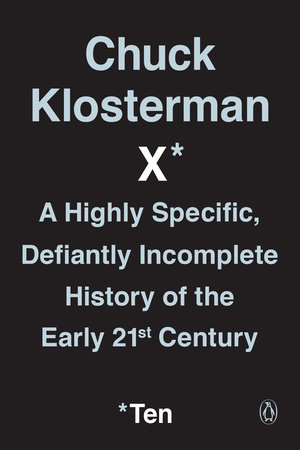 Earlier this week, I started reading Chuck Klosterman X: A Highly Specific, Defiantly Incomplete History of the Early 21st Century by Chuck Klosterman. As you may know, Klosterman is one of my favorite authors/writers. This is a collection of essays and articles he has written over the past 19 years on various pop culture and sports-related topics. Thus far, articles have includes such subjects as a North Dakota junior college basketball game from 1988, zombies, and Charlie Brown.
Books Read in 2019:
-The Anatomy of Evil by Michael H. Stone, M.D.
-
The Girl Who Loved Tom Gordon by Stephen King
-
Room Full of Mirrors: A Biography of Jimi Hendrix by Charles R. Cross
A few weeks ago, I finished reading The Girl Who Loved Tom Gordon by Stephen King. It's a short novel about a 9-year-old girl who gets lost in the woods while on a family hiking in 1998, after she takes a pee break and then can't find her way back to the trail. She makes a few wrong turns and has to survive for over a week with nothing but a little food, some water, her wits, and her walkman, which she uses to tune into Red Sox games. She hallucinates that her favorite baseball player, then-Red Sox closer Tom "Flash" Gordon (who was in the midst of an All-Star season that year), comes to talk to her and help guide her through the woods. But there is something else that lurks in among the trees. Will it capture our young heroine before she can find her way out or be found? I'm not telling.
Since then, I started reading Room Full of Mirrors: A Biography of Jimi Hendrix by Charles R. Cross. It's somewhat timely for me, since I was lucky enough to see the Experience Hendrix tour last Friday at Chicago Theatre. Since I knew that was coming up, I decided to start this book a couple weeks ago. Other than The Beatles, I have more Jimi Hendrix music in my catalog than any other band or artist. I know his music inside and out -- and I know about Monterrey Pop, Woodstock, and the legendary stories about legendary guitarists seeing him for the first time and realizing they wouldn't ever be the world's best guitarist -- but I don't really know much about his childhood or personal life. Turns out his childhood was pretty shitty! But it got better -- well, until 27.
Books Read in 2019:
-The Anatomy of Evil by Michael H. Stone, M.D.
-
The Girl Who Loved Tom Gordon by Stephen King
Yesterday, I finished reading The Anatomy of Evil by Michael H. Stone, M.D. It was a fascinating look at acts we consider "evil" and what causes those acts. Stone is a forensic psychiatrist, and the purpose of the book is to try to categorize evil into 22 gradations of evil, so that a better understanding of the causes of what makes people do horrible things. The book focuses on acts of evil in peacetime, rather than acts of evil in wartime, as there may be other reasons people do otherwise terrible things in war than being "evil." I really enjoyed Stone's discussions about both the "nature" and the "nurture" factors that contribute to someone becoming a murderer, someone who tortures others, or a serial killer. Suffice it to say, children who are physically, emotionally, or sexually abused have a much higher likelihood of becoming violent as they get older, but there are also genetic factors and, of course, many other environmental factors. Some of the more technical discussions of neuroscience were a little over my head, but Stone did a good job of explaining things in layman's terms. I would definitely recommend this for anyone who is interested in what makes serial killers (or other types of murderers and miscreants) tick or, more importantly, how to spot warning signs. Narcissists, animal torturers, bed wetters, and arsonists, beware!

Thanks to that book and some of my recent TV binge-watching (I definitely recommend The Killing, available on Amazon Prime, and The Innocent Man on Netflix), I am nearing my capacity for true crime and/or gruesome murder. Thus, today, I started a relatively short novel, The Girl Who Loved Tom Gordon by Stephen King. It's about a preteen girl who gets lost in the woods while on a family hiking trip in 1998, and she summons her favorite baseball player, then-Red Sox closer Tom "Flash" Gordon (who was in the midst of an All-Star season that year), to help her get through the night.
Books Read in 2019:
-The Anatomy of Evil by Michael H. Stone, M.D.
A week or two ago, I finished reading Hidden History of Lincoln Park by Patrick Butler. It was a good, quick read highlighting some of the notable events that have happened in Chicago's Lincoln Park neighborhood, or interesting people who have lived here. Obviously, this is geared more towards people who live in Lincoln Park or nearby, but I thought it was a fun book. Apparently, some hardcore shit has gone down around here, and that's aside from the St. Valentine's Day Massacre and John Dillinger's death.
Since then, I started The Anatomy of Evil by Michael H. Stone, M.D. Stone is a forensic psychiatrist, and the purpose of the book is to try to categorize evil into 22 groups, so that a better understanding of the causes of what makes people do horrible things. Criminal profiling has long been a fascination of mine, so this is right up my alley.
Books Read in 2018:
-How Music Works by David Byrne
-
But What If We're Wrong?: Thinking About the Present As If It Were the Past by Chuck Klosterman
-
Lamb: The Gospel According to Biff, Christ's Childhood Pal by Christopher Moore
-
My Cross to Bear by Gregg Allman with Alan Light
-
Different Seasons by Stephen King
-
Hidden History of Lincoln Park by Patrick Butler
Sorry for the posting hiatus. I was too busy with work, turkeys, and the like.
A couple weeks ago, I finished reading Different Seasons by Stephen King. Different Seasons was released in 1982, and it is comprised of four novellas. Three of of them have been made into major motion pictures, and the fourth is apparently going to be made into a movie within the next two years. I liked all of them. Here are the novellas:
-"Rita Hayworth and Shawshank Redemption" is, of course, the basis for The Shawshank Redemption, which I've never seen in full, but I know the premise and I know how it ends. The novella is good. It's about perseverance, but you already knew that.
-"Apt Pupil" was the basis for the 1998 film of the same name. It's about a teenage boy who discovers that a nazi war criminal (now in his 80s) is living under an assumed name in his California town. The boy and the man become acquaintances, bringing out the worst in each other.
-"The Body" was adapted into the 1986 classic Stand By Me, which I haven't seen in forever, so basically all I remembered was the infamous puking scene. The premise is that four twelve-year-olds in rural Maine in 1959 hear about the location of the dead body of a kid from another town, so they head off to find it.
-"The Breathing Method" is scheduled to be adapted into a film in 2020. It's about a strange and secretive men's club in New York City, where the members occasionally tell weird or macabre stories. It is the story within the story that an elderly club member bestows on the membership that was definitely the most grisly and interesting part of the four novellas for me. I'm interested to see the film adaptation of "The Breathing Method," as there is some pretty gruesome stuff going on.
I have since started reading Hidden History of Lincoln Park by Patrick Butler. Since I've lived in various locations in that neighborhood for over a decade, I figured I should probably know a little bit more about the history. Everyone knows about John Dillinger being shot in the alley next to to the Biograph Theater on Lincoln Avenue, or the St. Valentine's Day Massacre at what is now an empty yard on Clark, between Armitage and Webster, but there is a lot more (good and bad). Hell, I've already learned about some local bars that I've visited many times that are haunted.
Books Read in 2018:
-How Music Works by David Byrne
-
But What If We're Wrong?: Thinking About the Present As If It Were the Past by Chuck Klosterman
-
Lamb: The Gospel According to Biff, Christ's Childhood Pal by Christopher Moore
-
My Cross to Bear by Gregg Allman with Alan Light
-
Different Seasons by Stephen King
A couple weeks ago, I finished reading Gregg Allman's autobiography, My Cross to Bear by Gregg Allman with Alan Light. It was a really good autobiography. Allman had a crazy life, moving around the South as a kid and going to military boarding school for a bit, along with older brother Duane. Of course, then they formed a band with two guitarists, two drummers, a bassist, and a singer. Allman always had a voice that seemed older than his body. Of course, tragedy hit the Allman Brothers Band twice, first in 1971 when Duane died in a motorcycle accident and then a year later when Berry Oakley also died in a motorcycle accident. Allman and the band kept trucking for a few more years before breaking up and then reuniting several times over the years. He also had a pretty successful solo career in the '70s and '80s, married Cher and about four or five other women, had a few kids (but not more than one per wife), and, of course, did way too many drugs. It was a good read, and if you're an Allman Brothers fan (even just a casual one), you should check it out.
I have since started Different Seasons by Stephen King. I do enjoy me some Stephen King, especially in the fall. Different Seasons is comprised of four novellas, three of which have been made into major motion pictures and one of which is forthcoming. "Rita Hayworth and Shawshank Redemption" is, of course, the basis for The Shawshank Redemption. I am one of the six people in the United States who has not seen the movie in its entirety. Sadly, I saw the last 45 minutes of the movie in a business class in college, so I know what happens. The novella was good, though. "Apt Pupil" was the basis for the 1998 film of the same name. I haven't seen that either, but I remember the trailers, and I am quite certain one of my landlords in Bloomington was the inspiration for the old man. "The Body" was adapted into '80s classic Stand By Me, which I haven't seen in over 25 years, so hopefully I've forgotten more than I've remembered. Finally, "The Breathing Method" is scheduled to be adapted into a film in 2020.
Books Read in 2018:
-How Music Works by David Byrne
-
But What If We're Wrong?: Thinking About the Present As If It Were the Past by Chuck Klosterman
-
Lamb: The Gospel According to Biff, Christ's Childhood Pal by Christopher Moore
-
My Cross to Bear by Gregg Allman with Alan Light
A couple weeks ago, I finished reading Lamb: The Gospel According to Biff, Christ's Childhood Pal by Christopher Moore, which was a lovely piece of satire. The premise is that Heaven wants to fill in the gaps in the four gospels, which don't really tell much about the childhood, adolescence, and young adulthood of Jesus. So, Jesus's childhood friend Biff is resurrected and put into an L.A. hotel room with an angel, and Biff narrates his stories about growing up with Jesus. It was very good, and would probably been even funnier if I was more familiar with the Bible. Basically, when they're 13, Jesus and Biff set off to find the Three Magi. They find all three in different parts of the world, and study under each of them, learning valuable lessons that inform Jesus's teachings. Spoiler alert: he dies in the end.
 After taking a few weeks off and wasting my morning and afternoon commute playing on my phone, this morning I started reading Gregg Allman's autobiography, My Cross to Bear by Gregg Allman with Alan Light. About five years ago, I went into Costco on a Saturday afternoon, as is the custom. It was busier than usual, and there were a bunch of people in line for something. I noticed a pallid, ghostly shell of a man sitting at a table. "Holy shit, that's Gregg Allman," I blurted out to a man with fourteen pounds of mussels in his cart. He was signing copies of My Cross to Bear, but I could not afford to wait in line for three hours, so I waited five years to buy the book -- my form of silent protest of the fact that the book wasn't called I'm No Angel. I was fortunate enough to see him live at the House of Blues a couple years ago, and he was awesome. The autobiography was highly recommended and ranked one of Rolling Stone's top 20 rock biographies. The first five pages have been satisfactory.
Books Read in 2018:
-How Music Works by David Byrne
-
But What If We're Wrong?: Thinking About the Present As If It Were the Past by Chuck Klosterman
-
Lamb: The Gospel According to Biff, Christ's Childhood Pal by Christopher Moore
A little over a week ago, I finished reading But What If We're Wrong?: Thinking About the Present As If It Were the Past by Chuck Klosterman. The book is based on the premise that we are mostly wrong about predicting the future, and we are usually wrong when we arrogantly think that what we know now is how it will always be. It also explored some more metaphysical ideas, like multiverses and the concept of time. I thought it was an interesting premise for a book because I have often thought about what movies, TV shows, actors/actresses, or music from the past 50 years will be remembered or celebrated in another few hundred years. More terrifying for me, is the question: will there always be rock and roll? I hope to be long dead before the answer is "no" -- or at least that I'm some sort of undead being that can carry on the gospel of the electric guitar to ensure the answer is never "no."
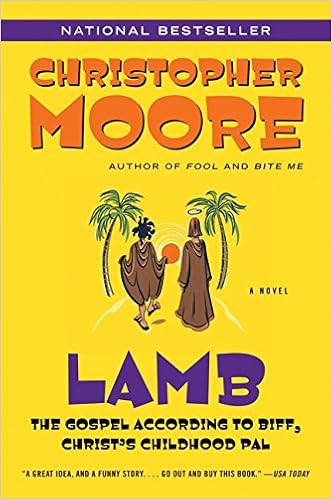
Speaking of gospels, I just started Lamb: The Gospel According to Biff, Christ's Childhood Pal by Christopher Moore, which came highly recommended from multiple people. It chronicles Heaven's intent to fill in the gaps in the four gospels by resurrecting Jesus's childhood friend Biff, who narrates his stories about growing up with Jesus to the angel Raziel. I enjoy a good satire, especially those that might be viewed as sacrilege by one or more religions. So far, it's living up to the hype.
Books Read in 2018:
-How Music Works by David Byrne
-
But What If We're Wrong?: Thinking About the Present As If It Were the Past by Chuck Klosterman
A few weeks ago, or maybe a month -- shit, I don't know, man -- I finished reading How Music Works by David Byrne. Byrne -- who was, of course, the lead singer and lead songwriter for Talking Heads -- wrote what is basically a text book about various aspects of music, music theory, the history of music, how we think about music, and why we make and listen to music. It was interesting, and definitely a book that you don't need to read straight through or need to read quickly all at once. That's not meant to be a knock, as Byrne himself admitted that the chapters are pretty much independent. The chapter I found most interesting was on the business of music and how artists get paid, both on the publishing side and the recording/performing side. The bottom line is this: don't buy digital music because it is fucking over the artists. I knew there was a reason I still buy CDs and vinyl. More money goes to the artist.
I have since started reading But What If We're Wrong?: Thinking About the Present As If It Were the Past by Chuck Klosterman. He is one of my favorite authors and has been since I read Fargo Rock City about twelve years ago. I think I've read every one of his books, fiction and nonfiction. But What If We're Wrong?: Thinking About the Present As If It Were the Past is based on the premise that we are mostly wrong about predicting the future, and we are usually wrong when we arrogantly think that what we know now is how it will always be. So far, it's a fascinating read, and kind of a mind fuck.
Books Read in 2018:
-How Music Works by David Byrne
At some point in November, I finished reading Pet Sematary by Stephen King. I found it rather enjoyable. I have never seen the 1989 movie, but perhaps I should check that out. The book is about an old pet cemetery in a small Maine town that has been maintained by the town's children (hence the misspelling) and that has some mystical powers because it's near an ancient Indian burial ground (of course). The kicker is that said Indian burial ground has special resurrectional (if that's a word) powers. After a couple and their two young kids and cat move to town and the cat gets hit by a car, the father takes it to the burial ground at the behest of an old neighbor who has lived in the town all his life. Good idea or bad idea? You'll have to read to find out.
After that, I read James Brown's 1986 autobiography, which was great. It was written before several legal issues in the late '80s, although it has apparently been updated since then. The version I read was the original one, so it was all rosy at the end, as The Godfather of Soul was fresh off his career-rejuvenating appearance in Rocky IV. The man was truly amazing, and he certainly earned his nickname "The Hardest Working Man in Show Business." If only he could have hired an accountant to pay his taxes for him. I finished that one up in December at some point and have been wasting my train trips playing Words With Friends and draining my monthly data allotment.
 I am now about to start reading How Music Works by David Byrne. As you may or may not (but probably should) know, Byrne was the lead singer and lead songwriter for Talking Heads. The book was recommended to me by multiple people, and apparently it's kind of a combination of autobiography and musical theory. We'll see how that -- wait for it -- works. See what I did there?
Earlier this month, I finished reading The Bazaar of Bad Dreams by Stephen King. It's a collection of King's short stories, and it was predictably good. I didn't like it quite as much as Night Shift, which I read last fall, but it was still very good. Not everything is necessarily "horror," but rather there is some horror, some suspense, and some science fiction. Without giving too much away, here are a couple of my favorite short stories from The Bazaar of Bad Dreams:
-Ur: A college English professor buys a Kindle and discovers that it contains books and news articles from parallel universes, which becomes an issue when he attempts to prevent a tragedy he learns about while reading news articles from the future about his universe.
-Morality: A married woman who works as a nurse for a wealthy retired reverend. She and her husband are having financial issues, and the reverend asks her to commit a "sin by proxy" (although not of a sexual nature), in exchange for several hundred thousand dollars.
-Bad Little Kid: A death row prisoner the night before his execution explains to his lawyer why he murdered the child that sent him to prison. But was it a child after all?
-Obits: An internet zine writer who specializes in scathing celebrity obituaries realizes he may be able to cause living people to die by writing their obits, and then he has to come to grips with how to use his new-found power.
-Blockade Billy: An elderly former professional baseball coach recounts when, in 1957, both of his team's catchers were injured just before the season started, so the team has to sign a minor leaguer they've never seen, Billy Blakely. He turns out to be a star rookie, but some odd things happen and we learn Billy's true identity.
 Since we're in the season of the macabre, I am sticking with Master of Horror, going with Pet Sematary by Stephen King. It is about a longstanding pet cemetery in a small Maine town that has been maintained by the town's children (hence the misspelling) and that has some mystical powers. It's one of his classics, but I've never read it, nor have I seen the 1989 movie (or its 1992 sequel, which is not based on the book, but uses its setting). So far so good.
Books read in 2017:
-X-Ray: The Unauthorized Autobiography by Ray Davies
-Phil Lynott: The Rocker by Mark Putterford
-I Am Brian Wilson: A Memoir by Brian Wilson with Ben Greenman
-
Trouble Boys: The True Story of The Replacements by Bob Mehr
-
The Bazaar of Bad Dreams by Stephen King
About a month ago, I finished reading Trouble Boys: The True Story of The Replacements by Bob Mehr. It was a fascinating and depressing biography of a band that could have and should have been one of the biggest alternative bands of the late '80s and early '90s. The Replacements were basically on the same career arc as R.E.M. -- and were much better and edgier, in my opinion. But where R.E.M. actually made wise career decisions, The Replacements engaged in self-sabotage like no other band in rock history. Aside from the band's rampant alcoholism and drug abuse:
- They purposely tanked auditions for record labels.
- They destroyed and regularly pissed all over their own tour bus (which they had to pay for).
- They refused to release videos during the formative years of MTV.
- They would show up wasted to meetings with records labels and do their best to piss off the people who could have given them record deals.
- When they were given the chance to tour as openers for bigger acts (like Tom Petty and The Heartbreakers), they tried to alienate audiences.
- They swore live on air when they were the musical guest on Saturday Night Live in 1986 (resulting in being blackballed from network television).
- When they finally released a video, it was a song about teen suicide ("The Ledge"), right around the same time as several high-profile teen suicides around the country, so MTV refused to play it
- They would play "pussy sets" when they didn't like the way a concert audience was reacting, basically bombing on purpose and playing random songs that they thought the audience would hate.
- They would literally burn the money they got for their per diems.
- When ostensibly promoting a record by doing radio interviews, they would often purposely piss off the very DJs who would have otherwise played their songs on the air.
At the recommendation of a friend, I listened to the band's albums kind of chronologically as I was reading about the band making each album, and I definitely recommend doing the same. If nothing else, the band was a huge influence on the alternative rock scene in the late '80s and '90s, and the book was a great read, particularly if you are looking to read about one of those bands that people always say "why didn't they ever get big?" The answer here seems to be booze, drugs, and a paralyzing fear of success, but it's a hell of a ride.
After four rock and roll biographies in a row, I decided to switch it up, going back to some horror/suspense. I started reading The Bazaar of Bad Dreams by Stephen King. It's another collection of King's short stories. I read Night Shift last fall and thoroughly enjoyed it. Then again, I don't think there's anything I've read by Stephen King that I haven't enjoyed.
Books read in 2017:
-X-Ray: The Unauthorized Autobiography by Ray Davies
-Phil Lynott: The Rocker by Mark Putterford
-I Am Brian Wilson: A Memoir by Brian Wilson with Ben Greenman
-
Trouble Boys: The True Story of The Replacements by Bob Mehr
A few weeks ago, I finished up I Am Brian Wilson: A Memoir by Brian Wilson with Ben Greenman, which, as you may have been able to surmise from the title, is Brian Wilson's autobiography. All in all, it was pretty good. For as long as I can remember, I've been a Beach Boys fan, and Wilson was, of course, the driving force and main songwriter for the band. In the book, Wilson explains some of his inner demons that stopped him from touring with the group in 1964, and then eventually led to him becoming somewhat of a recluse, controlled by a psychiatrist (Dr. Landy) for nearly a decade. It's not all depressing, though, as Wilson has overcome most of his demons and seems to be in a really good place right now.

I have since started reading Trouble Boys: The True Story of The Replacements by Bob Mehr. I honestly could not tell you when or how I got into The Replacements. I certainly didn't know anything about them when I was growing up, and as far as I know, none of my friends in high school or college listened to them. At some point after college, I heard of them -- whether it was during a rock doc, in Rolling Stone, or elsewhere -- and I eventually decided to check them out. I bought their Let It Be album, and I thought it was awesome, so I bought a few more albums, and I thought those were awesome too. They are one of those bands that should have been huge, but for whatever reason, was more of an underground band, starting out as kind of a punk/hardcore-ish band in the early '80s, moving to an alternative "college rock" sound in the mid to late '80s before breaking up in 1991. Regardless of the phase, the music is good. I didn't know too much about the band's history, though, other than that lead singer Paul Westerberg is a great songwriter, bassist Tommy Stinson was still in high school (or high school age, anyway) when the band recorded their first couple albums and later played in Guns N' Roses, his older brother, guitarist Bob Stinson, died from drug-related health issues in the '90s, and their drummer shares a last name with the fourth planet from the sun. So far, it's a pretty entertaining read.
Books read in 2017:
-X-Ray: The Unauthorized Autobiography by Ray Davies
-Phil Lynott: The Rocker by Mark Putterford
-I Am Brian Wilson: A Memoir by Brian Wilson with Ben Greenman
A couple weeks ago, I finished reading Phil Lynott: The Rocker by Mark Putterford. All in all, it was a pretty solid read, and a must for any Thin Lizzy fan. As the co-founder, lead singer, bassist, and lead songwriter of Thin Lizzy, Lynott was a mercurial and charismatic rock star. Born out of wedlock to a white Irish mother and a black South American man, he was raised mainly in Dublin by his grandparents, while his mother and stepfather ran a hotel in Manchester. Sticking out like a sore thumb didn't get Lynott down, and he found music at a relatively young age, eventually forming Thin Lizzy in 1969. During the '70s, Thin Lizzy became the first internationally successful Irish rock band. Bad luck seemed to get in the way of huge success in America, where the band only charted on the Billboard Hot 100 with "The Boys Are Back In Town" (#12), "Cowboy Song" (#77), and "Do Anything You Want To" (#81). However, in their native Ireland, the UK, and Europe, they were much more commercially successful, scoring 14 Top 40 hits in the UK (including 4 Top 10), 9 Top 10 albums on the UK charts, along with 17 Top 40 hits on the Irish pop charts (including 7 Top 10s and 2 #1s). Sadly, the rock star lifestyle was too enticing for Lynott, and he became addicted to heroin, which led to his death in January 1986. Thin Lizzy has become one of my favorite bands over the past ten years or so, and I'd put Lynott's ability to tell a story in a song right up there with Springsteen, Van Morrison, and Dylan. Still very much beloved in Ireland, in 2005, a life-size bronze statue of Lynott was erected in Dublin in 2005, and sits on Harry Street, just off of Grafton Street (if you happen to be in Dublin any time soon).

From the front man of the greatest Irish rock band of all-time to the front man of arguably the greatest American band of all-time, I have since started reading I Am Brian Wilson: A Memoir by Brian Wilson with Ben Greenman. The Beach Boys were my first favorite band, and there are very few people who can claim they have influenced music over the last 55 years as much as Brian Wilson has. The man was (and is) a musical genius, who had his own issues with substance abuse, and then an overbearing psychiatrist. But at least he's still alive.
Books read in 2017:
-X-Ray: The Unauthorized Autobiography by Ray Davies
-
Phil Lynott: The Rocker by Mark Putterford



 Posts


