Steppenwolf rose to fame in the late '60s on the heels of "Born To Be Wild," the 1968 hit that is often credited as the first use of the phrase "heavy metal" in music. That song hit #2 on the Billboard Hot 100 and has since become an anthem for motorcyclists (thanks in large part to its inclusion on the Easy Rider soundtrack) and roaming free at high speeds.
But it's the band's other big hit -- "Magic Carpet Ride," also released in 1968 -- that I like better. The song is a psychedelic ball of feedback and organs that reached #3 on the Billboard Hot 100. I can only imagine how many acid trips were enhanced by this song. My earliest memory of it was when it was used in a Miller Genuine Draft commercial in the '80s, where some guy made an island around a bikini-clad woman on a beach using only his cowboy boot and his guile. Why he was wearing cowboy boots on a beach on a hot sunny day is a question that has not yet been answered.
Friday, October 05, 2018


Hair Band Friday - 10/5/18
1. "It's So Easy" (live) by Guns N' Roses
2. "Madalaine" by Winger
3. "Breaking the Silence" by Queensrÿche
4. "In the Sticks" by Warrant
5. "Spanked" by Van Halen
6. "Everybody Wants You" by Billy Squier
7. "Nothin' At All" by Heart
8. "Just Like Paradise" by David Lee Roth
9. "Now You See It (Now You Don't) by Ozzy Osbourne
10. "Born To Be My Baby" by Bon Jovi
2. "Madalaine" by Winger
3. "Breaking the Silence" by Queensrÿche
4. "In the Sticks" by Warrant
5. "Spanked" by Van Halen
6. "Everybody Wants You" by Billy Squier
7. "Nothin' At All" by Heart
8. "Just Like Paradise" by David Lee Roth
9. "Now You See It (Now You Don't) by Ozzy Osbourne
10. "Born To Be My Baby" by Bon Jovi
Thursday, October 04, 2018
Rocktober '60s Song #4: "You Really Got Me" by The Kinks (1964)
The Kinks are one of those bands that I think a lot of people kind of forget about -- or maybe don't think about as often as they should, anyway -- but they were massively influential. Power chords have been such a staple of rock and roll for so long, it's easy to forget that that wasn't always the case.
Power chords had certainly been used before The Kinks' 1964 hit "You Really Got Me," but the song brought power chords to the forefront, influencing countless bands and guitarists since then. Reaching #7 on the Billboard Hot 100 and #1 on their native UK pop charts, the song established The Kinks as one of the premier British Invasion bands and kicked off a successful career for the band.
One of the myths about the song is that Jimmy Page played the guitar solo in the middle of the song. He didn't. It was, in fact, regular Kinks' guitarist Dave Davies. A fun little tidbit is that, if you listen closely right before the solo (at about the 1:13 mark), you can hear someone in the background say something that sounds like "oaf." That's actually Dave Davies telling his brother Ray to "fuck off," as Ray had apparently tried to give Dave some encouragement before his solo, but instead broke his concentration. Ray tries to cover it up with the famous "oh no" a second or two later, before the solo kicks in. Enjoy.
Power chords had certainly been used before The Kinks' 1964 hit "You Really Got Me," but the song brought power chords to the forefront, influencing countless bands and guitarists since then. Reaching #7 on the Billboard Hot 100 and #1 on their native UK pop charts, the song established The Kinks as one of the premier British Invasion bands and kicked off a successful career for the band.
One of the myths about the song is that Jimmy Page played the guitar solo in the middle of the song. He didn't. It was, in fact, regular Kinks' guitarist Dave Davies. A fun little tidbit is that, if you listen closely right before the solo (at about the 1:13 mark), you can hear someone in the background say something that sounds like "oaf." That's actually Dave Davies telling his brother Ray to "fuck off," as Ray had apparently tried to give Dave some encouragement before his solo, but instead broke his concentration. Ray tries to cover it up with the famous "oh no" a second or two later, before the solo kicks in. Enjoy.
Wednesday, October 03, 2018
New Book: Different Seasons by Stephen King
A couple weeks ago, I finished reading Gregg Allman's autobiography, My Cross to Bear by Gregg Allman with Alan Light. It was a really good autobiography. Allman had a crazy life, moving around the South as a kid and going to military boarding school for a bit, along with older brother Duane. Of course, then they formed a band with two guitarists, two drummers, a bassist, and a singer. Allman always had a voice that seemed older than his body. Of course, tragedy hit the Allman Brothers Band twice, first in 1971 when Duane died in a motorcycle accident and then a year later when Berry Oakley also died in a motorcycle accident. Allman and the band kept trucking for a few more years before breaking up and then reuniting several times over the years. He also had a pretty successful solo career in the '70s and '80s, married Cher and about four or five other women, had a few kids (but not more than one per wife), and, of course, did way too many drugs. It was a good read, and if you're an Allman Brothers fan (even just a casual one), you should check it out.
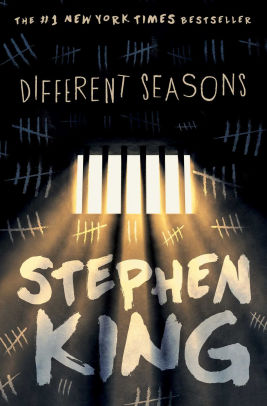
I have since started Different Seasons by Stephen King. I do enjoy me some Stephen King, especially in the fall. Different Seasons is comprised of four novellas, three of which have been made into major motion pictures and one of which is forthcoming. "Rita Hayworth and Shawshank Redemption" is, of course, the basis for The Shawshank Redemption. I am one of the six people in the United States who has not seen the movie in its entirety. Sadly, I saw the last 45 minutes of the movie in a business class in college, so I know what happens. The novella was good, though. "Apt Pupil" was the basis for the 1998 film of the same name. I haven't seen that either, but I remember the trailers, and I am quite certain one of my landlords in Bloomington was the inspiration for the old man. "The Body" was adapted into '80s classic Stand By Me, which I haven't seen in over 25 years, so hopefully I've forgotten more than I've remembered. Finally, "The Breathing Method" is scheduled to be adapted into a film in 2020.
Books Read in 2018:
-How Music Works by David Byrne
-But What If We're Wrong?: Thinking About the Present As If It Were the Past by Chuck Klosterman
-Lamb: The Gospel According to Biff, Christ's Childhood Pal by Christopher Moore
-My Cross to Bear by Gregg Allman with Alan Light
I have since started Different Seasons by Stephen King. I do enjoy me some Stephen King, especially in the fall. Different Seasons is comprised of four novellas, three of which have been made into major motion pictures and one of which is forthcoming. "Rita Hayworth and Shawshank Redemption" is, of course, the basis for The Shawshank Redemption. I am one of the six people in the United States who has not seen the movie in its entirety. Sadly, I saw the last 45 minutes of the movie in a business class in college, so I know what happens. The novella was good, though. "Apt Pupil" was the basis for the 1998 film of the same name. I haven't seen that either, but I remember the trailers, and I am quite certain one of my landlords in Bloomington was the inspiration for the old man. "The Body" was adapted into '80s classic Stand By Me, which I haven't seen in over 25 years, so hopefully I've forgotten more than I've remembered. Finally, "The Breathing Method" is scheduled to be adapted into a film in 2020.
Books Read in 2018:
-How Music Works by David Byrne
-But What If We're Wrong?: Thinking About the Present As If It Were the Past by Chuck Klosterman
-Lamb: The Gospel According to Biff, Christ's Childhood Pal by Christopher Moore
-My Cross to Bear by Gregg Allman with Alan Light
Rocktober '60s Song #3: "Runaway" by Del Shannon (1961)
The five-year period between February 1959 and February 1964 is generally considered one of the worst periods in rock and roll history. On February 3, 1959, three of rock and roll's budding stars, Buddy Holly, Ritchie Valens, and the Big Bopper, died in a plane crash in Iowa. Elvis was in the army from 1958 to 1960, and then generally focused on acting in horrible movies when he returned. Until the Beatles appeared on the Ed Sullivan Show in February 1964, changing music forever and saving rock and roll, the early '60s were plagued by bubblegum pop and cheesy teen crooners, like Bobby Vee, Fabian, Neil Sedaka, Bobby Vinton, and the like. That's not to say all the music being put out at the time was bad -- just that there was a whole lotta schmaltz and pop being played on the radio, and not much rock and roll.
One of the exceptions was Del Shannon's 1961 smash hit "Runaway." Shannon co-wrote the song with Max Crook, who had recently invented his own take on the electronic keyboard called the Musitron, which is featured heavily in "Runaway." The song itself is about a guy whose girlfriend left him, leaving him to wonder, in a magnificent falsetto "why why why why why she ran away."
The song shot up to #1 on the Billboard Hot 100 in late April 1961, and it stayed at #1 for four weeks. It also hit #1 in five other countries and Top 5 in a few others. Shannon would never hit #1 again, but he did continue to be successful throughout the early '60s, scoring 7 more Top 40 hits in the U.S. between 1961 and 1965, including two more Top 10 songs. He was also very popular in the UK, where, after "Runaway," he had 13 songs crack the UK Top 40, including 7 that went Top 10.
Unfortunately, he battled alcoholism and eventually killed himself in 1990, nine years before he was inducted into the Rock and Roll Hall of Fame. In addition to being a great early '60s rock and roll song, "Runaway" is mentioned in Tom Petty's "Runnin' Down a Dream" ("Me and Del were singing / A little 'Runaway' / I was a-flyin'").
One of the exceptions was Del Shannon's 1961 smash hit "Runaway." Shannon co-wrote the song with Max Crook, who had recently invented his own take on the electronic keyboard called the Musitron, which is featured heavily in "Runaway." The song itself is about a guy whose girlfriend left him, leaving him to wonder, in a magnificent falsetto "why why why why why she ran away."
The song shot up to #1 on the Billboard Hot 100 in late April 1961, and it stayed at #1 for four weeks. It also hit #1 in five other countries and Top 5 in a few others. Shannon would never hit #1 again, but he did continue to be successful throughout the early '60s, scoring 7 more Top 40 hits in the U.S. between 1961 and 1965, including two more Top 10 songs. He was also very popular in the UK, where, after "Runaway," he had 13 songs crack the UK Top 40, including 7 that went Top 10.
Unfortunately, he battled alcoholism and eventually killed himself in 1990, nine years before he was inducted into the Rock and Roll Hall of Fame. In addition to being a great early '60s rock and roll song, "Runaway" is mentioned in Tom Petty's "Runnin' Down a Dream" ("Me and Del were singing / A little 'Runaway' / I was a-flyin'").
Tuesday, October 02, 2018
Rocktober '60s Song #2: "Psychotic Reaction" by The Count Five (1966)
Today's Rocktober song takes us back to the early days of garage rock. The mid to late '60s were the birth of garage rock and proto punk rock. Hell, there's even an entire series of box set compilations dedicated to the genre -- the legendary (and awesome) Nuggets compilations, which .
Among the earliest garage rock and psychedelic rock hits was The Count Five's "Psychotic Reaction," which got all the way up to #5 on the Billboard Hot 100 in 1966. It was the title track to the band's 1996 debut album, which would end up being the group's only album (and the song the group's only hit) because the members of the group were in their late teens and decided to go to college instead of pursuing music. Fools!
Thankfully, in their short time together, The Count Five bestowed the world with a classic garage/fuzz/psychedelic rock song, influencing many garage and punk rockers after them. With that, here is the song. I don't think this is an official video, but then again, I'm an enigma.
Among the earliest garage rock and psychedelic rock hits was The Count Five's "Psychotic Reaction," which got all the way up to #5 on the Billboard Hot 100 in 1966. It was the title track to the band's 1996 debut album, which would end up being the group's only album (and the song the group's only hit) because the members of the group were in their late teens and decided to go to college instead of pursuing music. Fools!
Thankfully, in their short time together, The Count Five bestowed the world with a classic garage/fuzz/psychedelic rock song, influencing many garage and punk rockers after them. With that, here is the song. I don't think this is an official video, but then again, I'm an enigma.
Monday, October 01, 2018
Rocktober '60s Song #1: "Time Has Come Today" by The Chambers Brothers (1968)
As we kick off this year's Rocktober -- a month-long celebration of '60s rock -- beginning in about 20 minutes, there are four Major League Baseball teams whose time has come today. The Brewers, Cubs, Rockies, and Dodgers will be playing one-game playoff tiebreaker games to determine which teams win the NL Central and NL West (and, thus, get the #1 and #2 seeds in the NL and the right to have home-field advantage in at least one playoff series) and which two teams are relegated to the Wild Card game.
I was already planning on using The Chambers Brothers' 1968 hit "Time Has Come Today" for Rocktober, but given the two MLB games today, it seemed like an appropriate song for the occasion.
Chances are, if you know any Chambers Brothers' song, it's "Time Has Come Today." It has been used in various commercials and movies over the years. You may not have even known who sang it or their back story. The Chambers Brothers was one of the pioneering psychedelic soul bands. Like Sly and The Family Stone after them, The Chambers Brothers were an integrated bands. As the name implies, the group was mainly comprised of brothers whose last name was Chambers (George, Willie, Lester, and Joe, from oldest to youngest). They got their start on the gospel and folk circuits, but as with many folk artists of the mid-'60s, the call of plugging in was too much to ignore. They added drummer Brian Keenan in 1965, and then went electric, releasing their first album in 1967.
"Time Has Come Today" was released as a single in 1968, and it reached #11 on the Billboard Hot 100 -- the band's highest-charting song by a long shot -- but the song actually has a few versions. The original 1996 version is only about two and a half minutes long, and it's not quite the same as what would become a hit two years later. The album version of the "hit" was over 11 minutes long, and I'm not going to include that version here, but you can click on this link if you want to get trippy. There are then two shortened version of the 11-minute song. One was about 3 minutes, and the other is just under five minutes. It's the latter that we are used to hearing on the radio, so that's the one I'm going to embed here. (There's also a pretty sweet 14-minute live video version from German TV if you really want your soul to be psychedelicized.) Anyway, enjoy this nugget of rock glory.
I was already planning on using The Chambers Brothers' 1968 hit "Time Has Come Today" for Rocktober, but given the two MLB games today, it seemed like an appropriate song for the occasion.
Chances are, if you know any Chambers Brothers' song, it's "Time Has Come Today." It has been used in various commercials and movies over the years. You may not have even known who sang it or their back story. The Chambers Brothers was one of the pioneering psychedelic soul bands. Like Sly and The Family Stone after them, The Chambers Brothers were an integrated bands. As the name implies, the group was mainly comprised of brothers whose last name was Chambers (George, Willie, Lester, and Joe, from oldest to youngest). They got their start on the gospel and folk circuits, but as with many folk artists of the mid-'60s, the call of plugging in was too much to ignore. They added drummer Brian Keenan in 1965, and then went electric, releasing their first album in 1967.
"Time Has Come Today" was released as a single in 1968, and it reached #11 on the Billboard Hot 100 -- the band's highest-charting song by a long shot -- but the song actually has a few versions. The original 1996 version is only about two and a half minutes long, and it's not quite the same as what would become a hit two years later. The album version of the "hit" was over 11 minutes long, and I'm not going to include that version here, but you can click on this link if you want to get trippy. There are then two shortened version of the 11-minute song. One was about 3 minutes, and the other is just under five minutes. It's the latter that we are used to hearing on the radio, so that's the one I'm going to embed here. (There's also a pretty sweet 14-minute live video version from German TV if you really want your soul to be psychedelicized.) Anyway, enjoy this nugget of rock glory.
Is This Year's AL the Greatest League in MLB History?
Major League Baseball's regular season will end today, with not one, but TWO one-game playoff games to determine division champions in the NL Central and NL West. This is the first time in MLB history that two one-game playoff tiebreakers will be played in the same season. The Brewers face off against the Cubs at Wrigley at Noon Central, and the Rockies and Dodgers will play each other in Chavez Ravine at 3 p.m. Central. The winner of the Brewers/Cubs game wins the NL Central and gets the #1 seed in the NL. The loser will host the loser of the Rockies/Dodgers game in the NL Wild Card game on Tuesday, and the winner of that game will play the winner of the Brewers/Cubs game in the NLDS. Meanwhile, the winner of the Rockies/Dodgers game will get the NL West crown and the #2 seed, and will play the Braves in the NLDS. Did you get all that?
But forget the NL for a minute. This year's American League is making a case for the best league in a single season. Here are some impressive stats:
But forget the NL for a minute. This year's American League is making a case for the best league in a single season. Here are some impressive stats:
- The Red Sox won 108 games, the Astros won 103 games, and the Yankees won 100 games. This is only the 7th time in MLB history that three teams have won 100 games in the same season, but it is the first time all three 100+-win teams are in the same league.
- In addition to the Red Sox, Astros, and Yankees, the As won 97 games, the Indians won 91 games, and the Rays won 90 games.
- With four teams with 97 or more wins, this year's AL joins the 1977 AL and the 1999 NL as the only leagues to have four 97+-game winners.
- With six teams with 90 or more wins, this year's AL joins the 1977, 2002, and 2013 AL as the only leagues with six 90+-game winners.
- The defending World Series champion Astros have now won 100 or more games in consecutive seasons. They are the first team since the Cardinals in 2004 and 2005 to do that.
- The Astros' 57 road wins are the most since the Mariners won 59 games on the road in 2001, and those two teams are the only two teams since the MLB moved to the divisional format in 1969 to have 57 or more road wins in a season. Actually, they're the only two teams since the Taft Administration to achieve that feat. In the World Series era (1903 to the present), the only other teams to win 57 or more road games in a season prior to 1969 were the 1909 Cubs (who won 57 road games, but didn't win the NL pennant, thanks to Honus Wagner and the Pirates) and the 1906 Cubs (who won an astounding 60 road games, but lost to the White Sox in the World Series -- and don't you ever forget it, Cubs fans).
- The Astros also become the first team since the 2002-2003 Yankees to have 50+ road wins in consecutive seasons.
- The Red Sox's (is that the possessive of Red Sox?) 57 home wins are the most since, well, last year's Dodgers, but they're the first team to have 50+ home wins and road wins in a season since the 2011 Phillies. Here are the teams since 1903 that have had 50+ home and road wins in the same season (teams with a * won the World Series, and teams with a ** lost in the World Series, while the rest didn't advance to the World Series):
- 2018 Red Sox (57 H, 51 R)
- 2011 Phillies (52 H, 50 R)
- 2008 Angels (50 H, 50 R)
- 2005 Cardinals (50 H, 50 R)
- 2003 Yankees (50 H, 51 R)**
- 2002 Yankees (52 H, 51 R)
- 2001 Mariners (57 H, 59 R)
- 1998 Yankees (62 H, 52 R)*
- 1998 Braves (56 H, 50 R)
- 1997 Braves (50 H, 51 R)
- 1993 Braves (51 H, 53 R)
- 1993 Giants (50 H, 53 R)
- 1990 Athletics (51 H, 52 R)**
- 1988 Athletics (54 H, 50 R)**
- 1986 Mets (55 H, 53 R)*
- 1984 Tigers (53 H, 51 R)
- 1980 Yankees (53 H, 50 R)
- 1980 Orioles (50 H, 50 R)
- 1975 Reds (64 H, 44 R)*
- 1974 Dodgers (52 H, 50 R)**
- 1965 Twins (51 H, 51 R)**
- 1961 Tigers (50 H, 51 R)
- 1954 Indians (59 H, 52 R)**
- 1944 Cardinals (54 H, 51 R)*
- 1941 Yankees (51 H, 50 R)*
- 1939 Yankees (52 H, 54 R)*
- 1927 Yankees (57 H, 53 R)*
- 1909 Pirates (59 H, 54 R)*
- 1907 Cubs (54 H, 53 R)*
- 1906 Cubs (56 H, 60 R)**
- 1905 Giants (54 H, 51 R)*
- 1904 Giants (56 H, 50 R) (no World Series that year)
Of course, as we all know, statistics don't mean a thing once the playoffs roll around, so who knows what teams will actually win the World Series. But regardless, the NL playoffs will already be off to an exciting start after today's two one-game playoffs, and the AL playoffs are shaping up to be a bloodbath. Whoever survives the AL should be in a position to take the World Series crown, and there isn't a team in the AL who I would overlook as a possible World Series champ. Of course, I'm rooting for the Astros, but if they don't win it all, I'd want it to be the Brewers or Rockies, since neither of those franchises has won a World Series before.
Sunday, September 30, 2018
Rocktober is Upon Us!
Hello, children. Tomorrow marks the beginning of the best month of the year. And that means Rocktober -- GMYH's annual month-long celebration of rock and roll -- is here again and rarin' to go. As I do every October, I am going to fill you up with a daily dose of rock, at least on the weekdays where I'm in the office or have access to a computer.
I've tried to focus on a theme the last several Rocktobers. Over the last five years, I've done Rocktobers that focus on hair band songs, deep cut artists, the Glorious Ladies of Rocktober, deep cut songs, and live songs and albums. This year and the following five years will be no different. Welcome, my friends, to the Rocktober Decade Countdown. This year, all of the Rocktober songs will be from the 1960s. Next year, all the songs will be from the '70s, and the progression will continue in 2020 ('80s), 2021 ('90s), 2022 ('00s), and 2023 ('10s). I have not yet determined the theme for 2024, so lay off.
There will be no repeated artists during the course of the month. I'm going to try my best not to repeat songs that I have featured in prior Rocktobers, but I make no promises. As always, the week leading up to Halloween -- we'll say from 10/25 to 10/31, since Halloween is on a Wednesday this year -- will feature songs with dark, evil, or macabre themes. Retro Video of the Week will be suspended during Rocktober, but Hair Band Friday will continue because, even though this Rocktober will focus on the '60s, ain't nothin' wrong with some unadulterated glam metal every Friday (in addition to the Rocktober post, of course).
I've tried to focus on a theme the last several Rocktobers. Over the last five years, I've done Rocktobers that focus on hair band songs, deep cut artists, the Glorious Ladies of Rocktober, deep cut songs, and live songs and albums. This year and the following five years will be no different. Welcome, my friends, to the Rocktober Decade Countdown. This year, all of the Rocktober songs will be from the 1960s. Next year, all the songs will be from the '70s, and the progression will continue in 2020 ('80s), 2021 ('90s), 2022 ('00s), and 2023 ('10s). I have not yet determined the theme for 2024, so lay off.
There will be no repeated artists during the course of the month. I'm going to try my best not to repeat songs that I have featured in prior Rocktobers, but I make no promises. As always, the week leading up to Halloween -- we'll say from 10/25 to 10/31, since Halloween is on a Wednesday this year -- will feature songs with dark, evil, or macabre themes. Retro Video of the Week will be suspended during Rocktober, but Hair Band Friday will continue because, even though this Rocktober will focus on the '60s, ain't nothin' wrong with some unadulterated glam metal every Friday (in addition to the Rocktober post, of course).
Remember that this is Rocktober, so these will all be bands, artists, and songs that rock. There will be popular songs, songs that you may never had heard before, and maybe even some bands and artists you've never heard of. Rest assured, though, everything will rock. And everything will be groovy. Peace.
Friday, September 28, 2018
Hair Band Friday - 9/28/18
1. "D.O.A." by Van Halen
2. "Foolin'" by Def Leppard
3. "Demon Alcohol" by Ozzy Osbourne
4. "(You Can Still) Rock In America" by Night Ranger
5. "Fly To The Angels" by Slaughter
6. "Wild Is The Wind" by Bon Jovi
7. "Take a Walk" by Mr. Big
8. "Just a Gigolo/I Ain't Got Nobody" by David Lee Roth
9. "Rhythm of Love" by Scorpions
10. "Hell Child" by Lynch Mob
2. "Foolin'" by Def Leppard
3. "Demon Alcohol" by Ozzy Osbourne
4. "(You Can Still) Rock In America" by Night Ranger
5. "Fly To The Angels" by Slaughter
6. "Wild Is The Wind" by Bon Jovi
7. "Take a Walk" by Mr. Big
8. "Just a Gigolo/I Ain't Got Nobody" by David Lee Roth
9. "Rhythm of Love" by Scorpions
10. "Hell Child" by Lynch Mob
Subscribe to:
Posts (Atom)


 Posts
Posts


